1-minute self check
Check your facial
balance right now
Analyze your facial asymmetry degree and type, and get personalized corrective exercises
Your photo is analyzed on your device
How it works
01 — 03- 01
Front photo
Take a front-facing photo with camera or upload one
- 02
AI analysis
Measures asymmetry from facial reference points
- 03
Personalized care
Get exercises matched to your asymmetry type
20 corrective exercises by area
View allExercises are sorted along the same four areas as your analysis, so you can start with the area that scored lowest. Every exercise includes steps, why it works, the muscles involved, common mistakes, and FAQs.
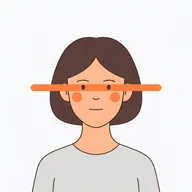 Eyes
EyesEye-height and brow-height differences. Mostly lifting and release moves that work the forehead and eye-ring muscles one side at a time.
4 exercises →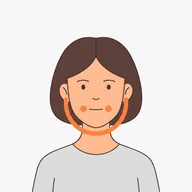 Mouth & jaw
Mouth-corner height and chin position. Masseter release, mouth-corner resistance, and two-sided chewing practice to retrain expression and chewing habits.
7 exercises →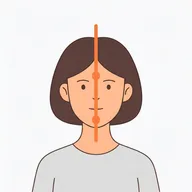 Midline
Alignment of brow, nose tip, and chin. Many moves start from posture — side-neck stretches, chin tucks, shoulder alignment.
5 exercises →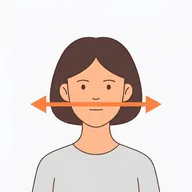 Facial width
Left-right width difference. Moves that use the cheek muscles evenly, such as alternating cheek puffs and balloon blowing.
4 exercises →Popular exercises
View all


Facial balance guides
View allPractical guides on the habits behind asymmetry — one-sided chewing, sleep position, forward head posture — plus the evidence and limits of facial exercise, and the signs that call for a doctor instead. No hype.
- What Is Facial Asymmetry? Causes and Self-Check Basics
No face is perfectly symmetric. Learn what counts as normal and when it deserves attention.
7 min read
- 7 Daily Habits That Fuel Facial Asymmetry
Often it is habits, not bones. Seven everyday patterns that tilt your face — and how to break them.
8 min read
- The TMJ and Facial Asymmetry: How They Connect
Clicking or one-sided jaw pain? How TMJ imbalance shapes the balance of your face.
7 min read
What gets measured
No face is perfectly symmetric. ALYGN extracts facial reference points from a single front-facing photo and scores the left-right balance of four areas separately. Knowing your area scores makes it clear which habits to fix and which exercises to prioritize.
- Eye balance
- Compares eye heights, eye sizes, and brow heights — the area most affected by head tilt.
- Mouth & jaw balance
- Looks at mouth-corner heights and chin position, where expression and chewing habits show up.
- Midline alignment
- Checks whether brow, nose tip, and chin form a straight line — strongly influenced by posture.
- Width balance
- Compares left and right facial width, revealing muscle differences from one-sided chewing.
Before you start observing facial balance
Facial asymmetry: what to know first
No one’s face is perfectly symmetric. Eye height, mouth-corner angle, and jawline shape differ slightly in everyone, and studies find some degree of asymmetry in most of the general population. The question is not whether you have asymmetry, but which area differs, by how much, and whether the difference has grown recently.
Asymmetry falls into two kinds by cause. Functional asymmetry comes from muscle habits — chewing on one side, resting your chin on a hand, side sleeping, jaw clenching — and has room to improve through habit changes and exercise. Structural asymmetry comes from differences in bone shape; exercise does not change it, and if needed it calls for a medical decision such as orthodontics or surgery.
ALYGN was built to help you tell the two apart. From one front-facing photo it extracts facial reference points, scores four areas separately — eyes, mouth & jaw, midline, facial width — and connects you to exercises for the areas you can work on and guides that explain the causes. Photos are processed on your device and never sent to a server.
Read: what is facial asymmetry? →Who this helps
If you cannot tell camera angle from real difference, check with numbers that correct for head rotation.
See which area the habit shows up in, and rebalance with exercises that use the opposite side.
Masseter and temporalis release exercises, plus a guide to the signs that mean you should see a doctor.
Measure regularly under the same conditions and see per-area score trends on a chart.
OUR CONTENT APPROACH
How we make our content
Our guides and exercise explanations are written from review papers in the oral and maxillofacial field and public health institutions, and we separate what exercise can change from what it cannot — no hype. The measurement method, references, and who runs the service are on the About page.
About ALYGN →Photos never leave your device
All analysis runs inside your phone browser. Photos are never uploaded or stored — only numeric results like scores and type are kept. No sign-up is needed to start; logging in is only for syncing your history across devices.
Frequently asked questions
See all FAQsHow accurate are the results?
Head angle is checked in real time and multiple frames are merged statistically to cancel jitter. Lighting and expression still affect results, so the most accurate use is tracking trends measured under the same conditions.
Do the exercises actually help?
Differences from muscle tension and habits have room to improve; differences rooted in bone structure do not change with exercise. ALYGN tells you, without hype, which areas are manageable through your per-area scores.
Does it cost anything?
Analysis and all exercise content are free, with no sign-up required.