Chin Tuck
Correct forward head posture that shifts your chin off midline.
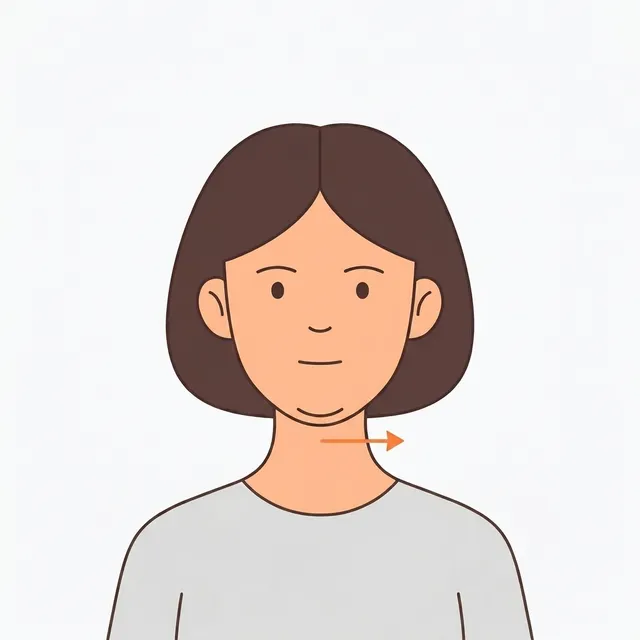
How to do it
- 1
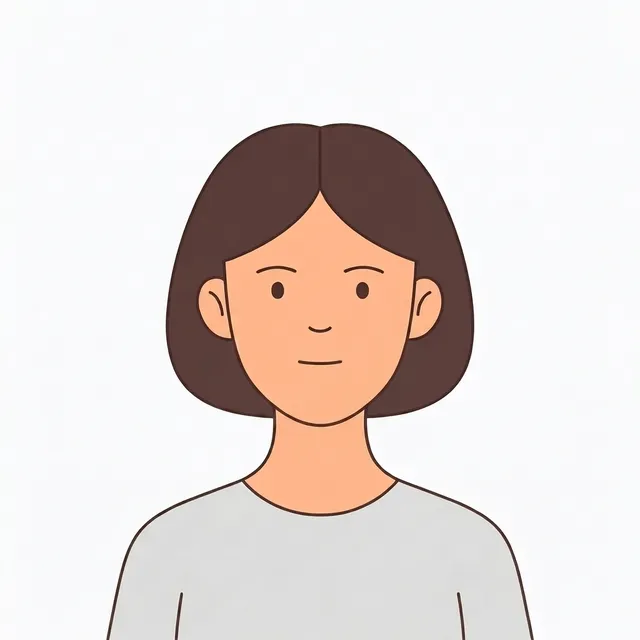
Sit upright and look straight ahead.
- 2
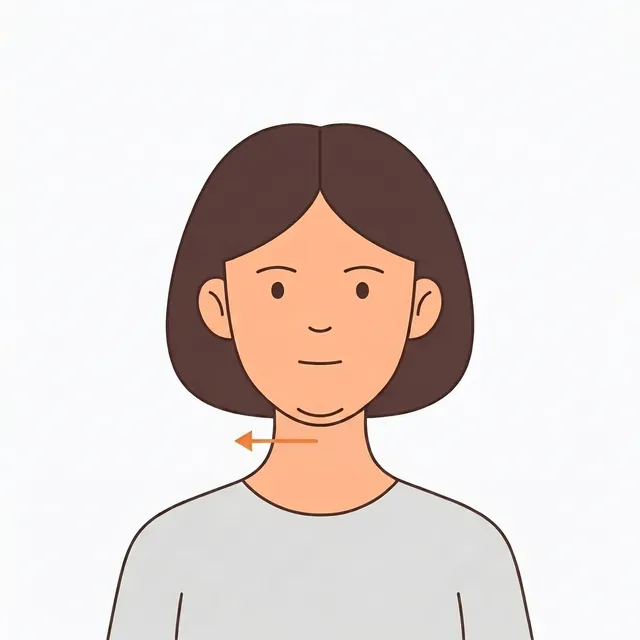
Gently draw your chin straight back horizontally.
- 3
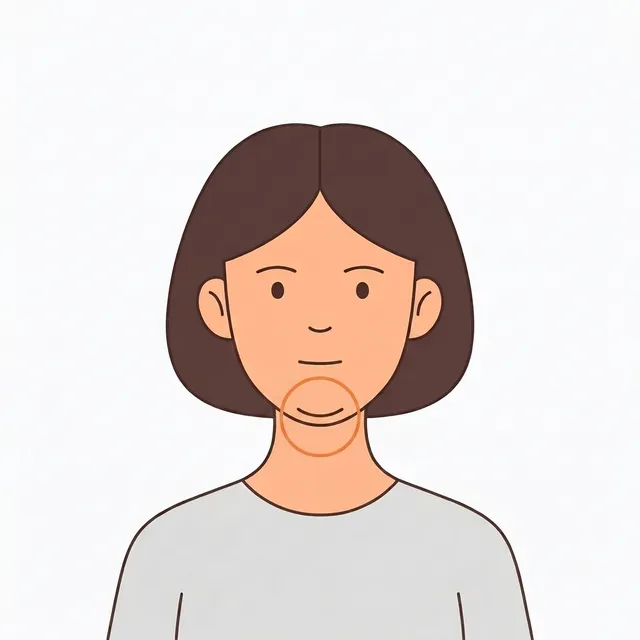
Hold for 5 seconds, then release slowly.
- 4
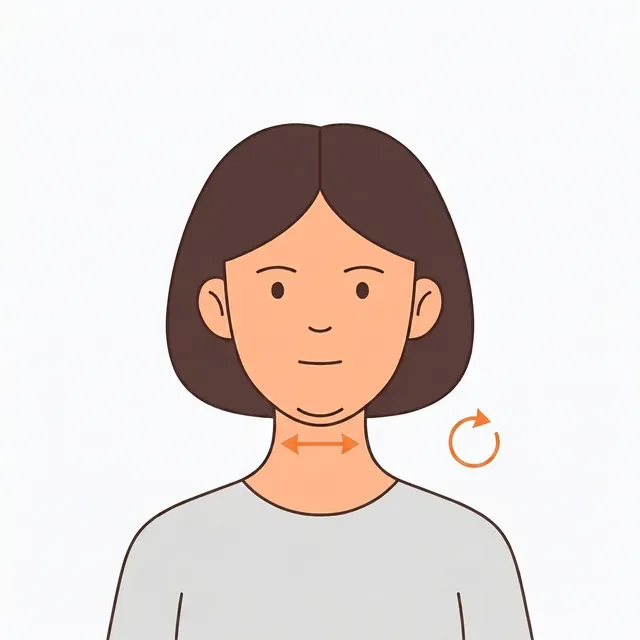
Repeat 10 times.
Authorship and evidence
Written by: ALYGN operator · content editor
Content reviewed:
Date of editorial content and source review. This does not represent review by a medical professional.
This exercise is self-care information for functional asymmetry that comes from muscle habits. Individual results and timelines vary, and the listed times and repetitions are not a medical prescription.
- NHS: Neck pain and stiff neck ↗
General information on neck comfort and seeking care for persistent symptoms. It does not show that neck or shoulder movement changes the facial midline or symmetry.
Why it works
Forward head posture shifts your head's weight forward, loading neck and jaw muscles unevenly. Chin tucks wake up the deep neck flexors and bring your head back over your spine, correcting a root habit behind midline shift.
An adult head weighs roughly 4–5 kg. When it sits directly over the spine, the neck only carries that weight — but the further it drifts forward toward a monitor or phone, the more the effective load multiplies. Tilting just 15 degrees more than doubles it, and the neck and shoulder muscles never share that burden perfectly evenly.
Your lower jaw hangs from your skull, so when the head shifts forward, the path along which the jaw opens and closes shifts too. With forward head posture, the lower jaw is pulled back and down as it opens, which can feed into midline-shift habits. The chin tuck resets the starting point — the position of the head itself.
Muscles involved
The main target is the deep neck flexors (longus colli and longus capitis) at the front of the neck. These postural muscles — too deep to feel from outside — are what keep the head stacked over the spine, and long-standing forward posture puts them to sleep. At the same time the suboccipitals at the top of the back of your neck get a stretch; when they shorten, the head stays locked in a slightly tipped-back position.
Common mistakes
- Nodding your head down — the chin should slide straight back horizontally.
- Shrugging your shoulders along — keep them down and move only the neck.
- Bouncing through fast reps — slow and steady is the point.
Signs you're doing it right
You should feel the back of your neck lengthen and a slight double chin form — that means the position is right.
How often and when
Ten reps, two to three sets a day, is plenty. The most effective timing is during desk work: once an hour, look away from the screen and do ten reps. Folded into your work rhythm, it needs no separate exercise slot. Your neck will feel better within days, but genuinely changing your habitual head position takes three to four weeks or more.
Once it feels easy
Once the movement feels natural, extend the hold from 5 to 10 seconds. The next step is resistance: press two fingers lightly against your chin and tuck against that pressure, or stand with the back of your head against a wall and gently push into it. Both load the deep flexors harder.
Frequently asked questions
Q. Will this give me a double chin?
The skin folding under your chin during the movement is normal — it actually signals correct form. It is a temporary crease, not new fat, and over time bringing the head back over the spine works in favor of a cleaner jawline, not against it.
Q. My neck clicks when I tuck. Should I continue?
Painless clicking usually comes from joint fluid or tendons shifting and is rarely a problem. Stop and get it checked if the sound comes with pain, tingling, or dizziness — especially tingling that runs down an arm, which can be a nerve-related sign.
Q. Does this actually help facial asymmetry?
It does not work facial muscles directly. But a tilted or forward-drifted head is one of the main reasons a face reads as tilted or off-midline in photos and mirrors, so straightening the foundation helps indirectly. If your ALYGN midline metrics come back consistently low, this exercise deserves priority.
Cautions
- · Stop if you feel neck pain.