Tongue Posture (Mewing)
Balance your jaw with proper tongue posture on the palate.
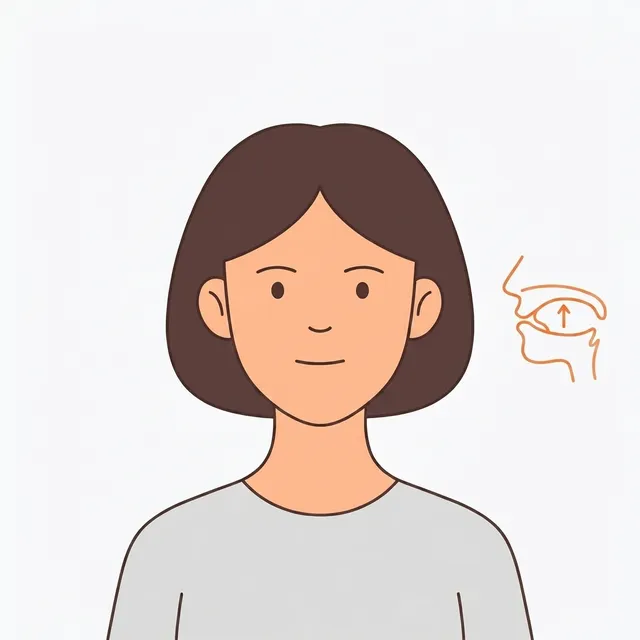
How to do it
- 1
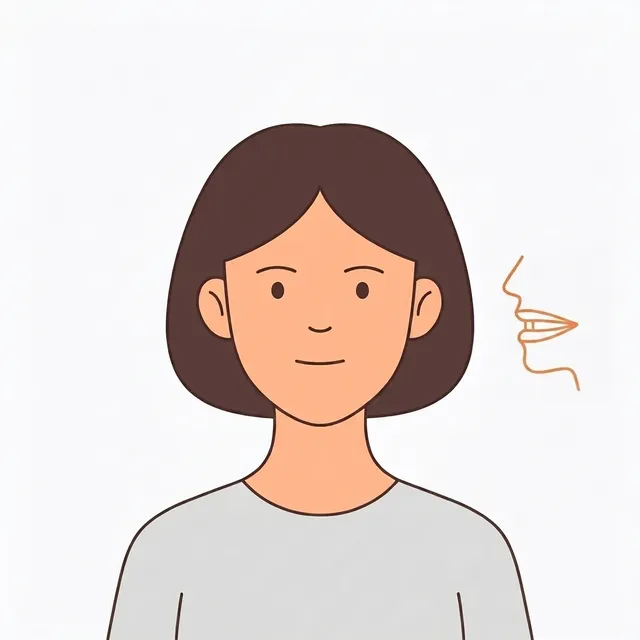
Close your lips with molars slightly apart.
- 2
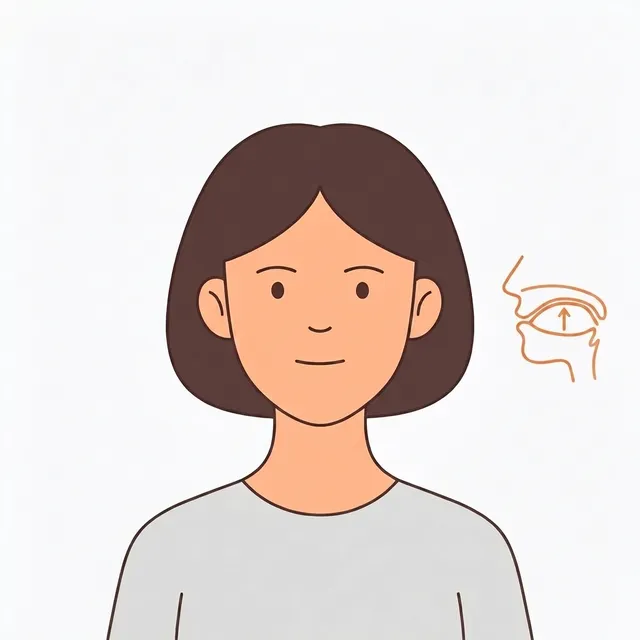
Rest your whole tongue flat against the palate.
- 3
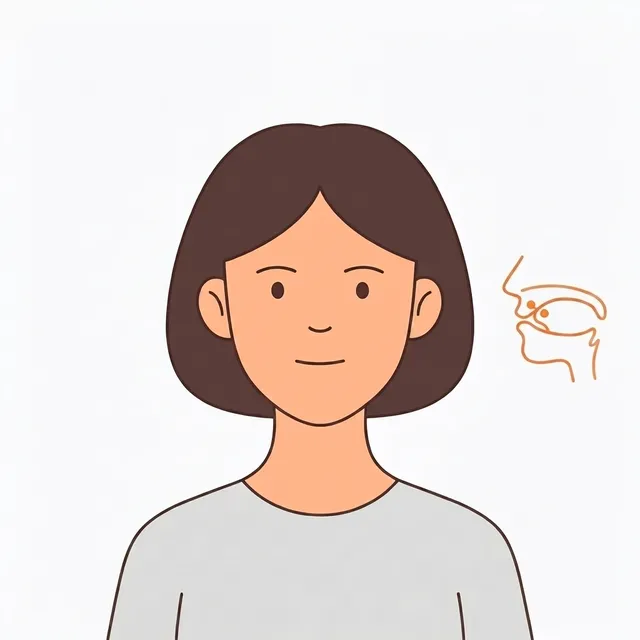
Place the tip just behind your front teeth.
- 4
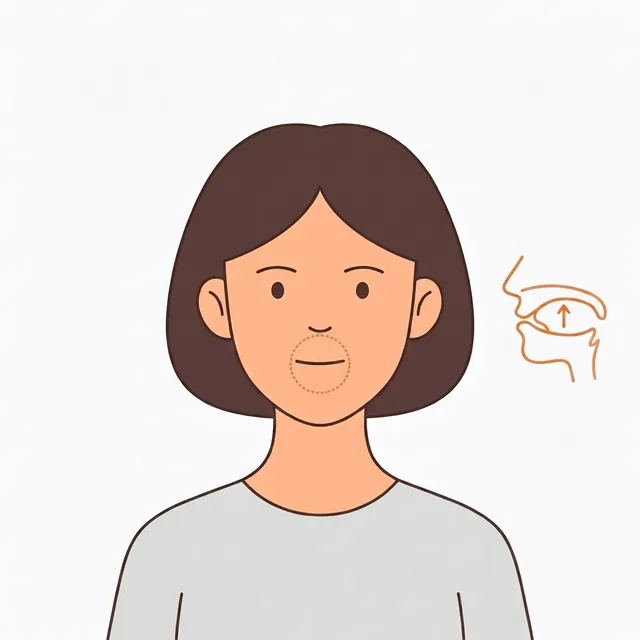
Practice keeping this position throughout the day.
Authorship and evidence
Written by: ALYGN operator · content editor
Content reviewed:
Date of editorial content and source review. This does not represent review by a medical professional.
This exercise is self-care information for functional asymmetry that comes from muscle habits. Individual results and timelines vary, and the listed times and repetitions are not a medical prescription.
- American Association of Orthodontists: Mewing claims and risks ↗
Discusses limits of claims that tongue pressure reshapes the jawline. It does not validate this comfortable mouth-rest example as treatment.
- NIDCR: Temporomandibular Disorders ↗
Background on jaw pain, locking, painless sounds, and conservative care. It does not validate this site’s individual movements or asymmetry correction.
Why it works
When your whole tongue rests on the palate, the lower jaw settles into a neutral, centered position. It corrects your resting jaw posture — which occupies most of the day — making it the foundation of oral balance.
Exercise takes minutes a day, but your resting posture runs for over 20 hours. When the tongue sags off the palate, the lower jaw drifts down and back with it — and in that slack state, the jaw can sit shifted to one side without you ever noticing. Tongue position is the switch that sets your jaw posture for all those default hours.
Tongue posture also comes paired with breathing. A tongue resting on the palate naturally leads to nasal breathing; a dropped tongue and open mouth invite mouth breathing, which is linked to dry mouth and poorer sleep quality — and during childhood growth, potentially to facial development. For adults too, the nasal-breathing habit is worth building in its own right.
Muscles involved
The tongue is not one muscle but a bundle of many. Pressing it to the palate recruits the genioglossus, which moves the tongue from inside the jaw, together with the tongue's own intrinsic muscles. In correct posture the entire tongue — middle and root, not just the tip — rests broadly against the palate, supported by the suprahyoid muscles at the front of the neck.
Common mistakes
- Touching only the tip — the whole tongue, back included, should rest flat on the palate.
- Clenching the molars — upper and lower teeth should stay slightly apart.
- Mouth breathing — this posture works together with nasal breathing.
Signs you're doing it right
A mild fatigue at the back of the tongue, a relaxed jaw, and lips resting lightly together — that combination means you have it right.
How often and when
The goal is not completing sets but changing your all-day default. Start by tying a "tongue check" to frequently recurring moments — after drinking water, waiting at a crossing — or set four or five phone reminders a day. After three to four weeks of conscious checks, the tongue stays up unconsciously for noticeably longer stretches.
Once it feels easy
Once it holds while sitting, raise the bar: keep the posture while walking or during light exercise, and then through the act of swallowing — the tongue should stay on the palate rather than dropping or pushing forward. If you habitually thrust your tongue against your front teeth when swallowing, correcting that is the finished form.
Frequently asked questions
Q. Is this the "mewing" thing? Does it really change the jawline?
Same principle. But the "it reshapes your bones" claims circulating on social media lack medical evidence for adults. What you can realistically expect: better tension balance around the jaw and tongue, a nasal-breathing habit, and a subtle change in resting appearance if your jaw used to hang slack. That is worth doing — just don't start expecting skeletal change.
Q. Holding my tongue up makes my jaw ache.
You are probably clenching your molars along with the tongue lift. Correct posture: tongue on the palate, upper and lower molars slightly apart — 2 to 3 mm. Holding with teeth clenched keeps the masseter under constant tension, which backfires. If it still hurts with teeth apart, have your jaw joint checked.
Q. My nose is often blocked — nasal breathing is hard.
Then fixing the congestion comes first. If rhinitis or a deviated septum makes nasal breathing itself difficult, this posture cannot hold, and forcing it just feels suffocating. See an ENT to address the cause — starting this habit afterward loses you nothing.
Cautions
- · Start with 5 minutes and increase gradually.