Masseter Release Massage
Release tight masseter muscles to reduce left-right jaw tension.
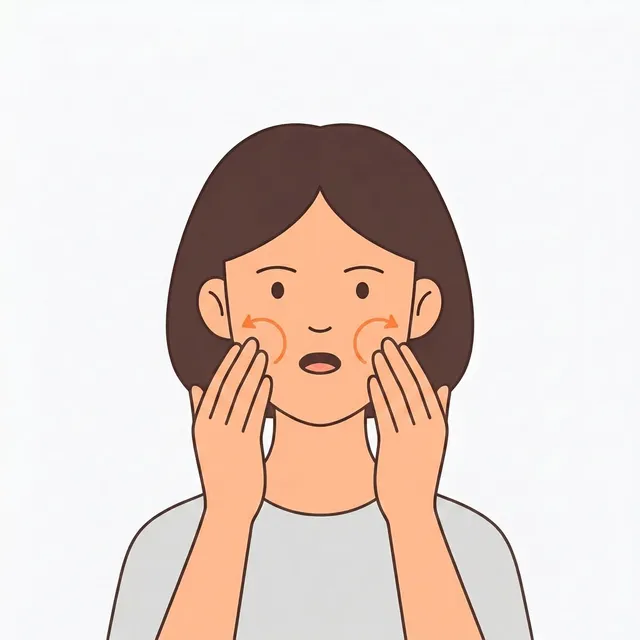
How to do it
- 1
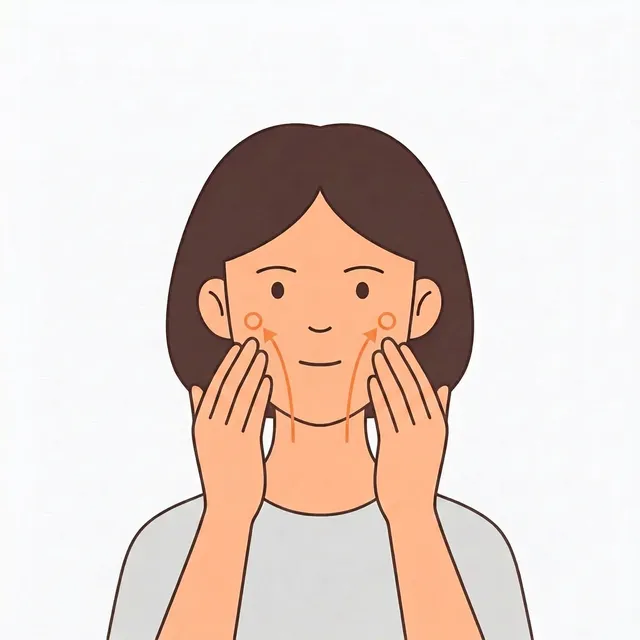
Place three fingers in the hollow under your cheekbones.
- 2
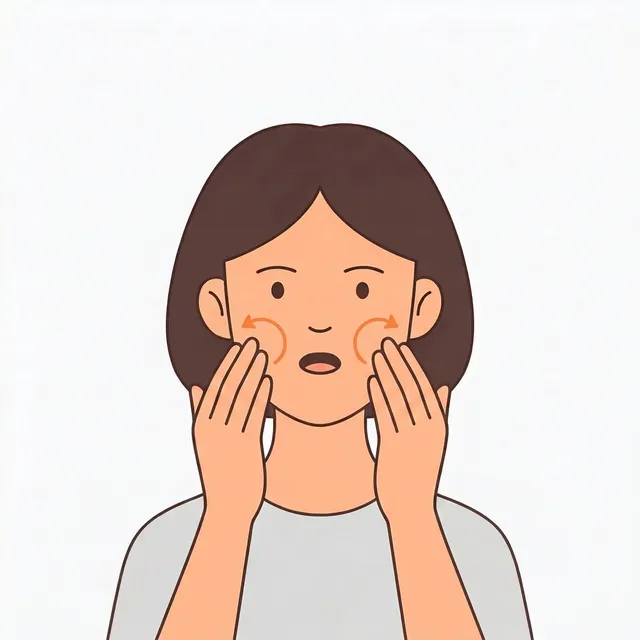
With your mouth slightly open, massage in circles for 30 seconds.
- 3
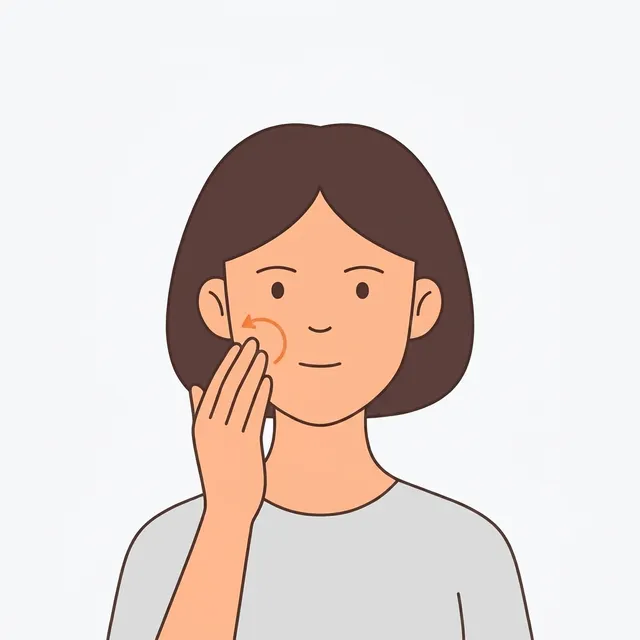
Spend 15 extra seconds on the tighter side.
- 4
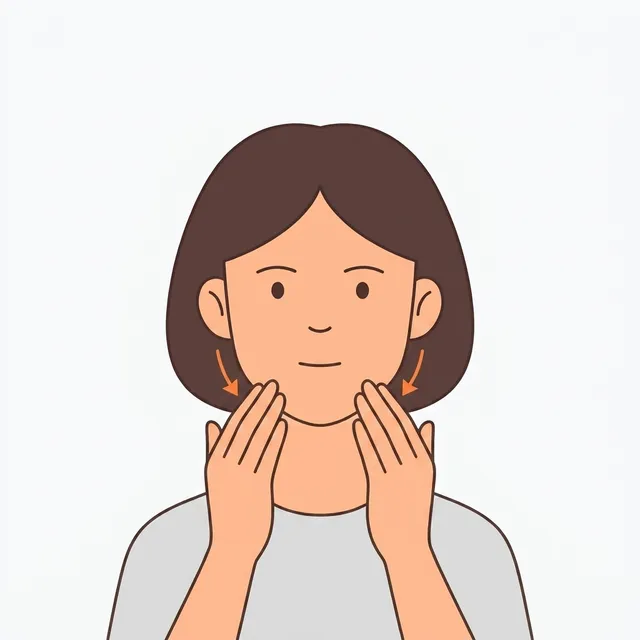
Repeat while moving down along the jawline.
Authorship and evidence
Written by: ALYGN operator · content editor
Content reviewed:
Date of editorial content and source review. This does not represent review by a medical professional.
This exercise is self-care information for functional asymmetry that comes from muscle habits. Individual results and timelines vary, and the listed times and repetitions are not a medical prescription.
- NIDCR: Temporomandibular Disorders ↗
Background on jaw pain, locking, painless sounds, and conservative care. It does not validate this site’s individual movements or asymmetry correction.
Why it works
One-sided chewing or clenching makes one masseter thicker and tighter than the other. Massage releases the tight fascia and lowers overactivity, helping even out left-right volume and tension.
The masseter is one of the strongest muscles in the body for its size. Chewing loads your molars with tens of kilograms of force, and you repeat chewing and swallowing more than 2,000 times a day. When that workload leans to one side, the muscle developing unevenly is less an anomaly than an expected outcome.
The key difference is that muscle responds to how much you use it, while bone does not. Massage will not reshape your jawbone, but the bulk and stiffness of an overworked, chronically tense muscle can change with release work and habit correction. If the width difference in your lower face appeared over the last few years, a muscular cause is relatively more likely.
Muscles involved
The primary target is the masseter — a rectangular muscle running from under the cheekbone to the angle of the lower jaw. It is the firm bulge you feel below your cheek when you clench your molars. Worth releasing alongside it is the temporalis at your temple: it closes the jaw together with the masseter, so when one tightens the other usually follows.
Common mistakes
- Pressing hard enough to bruise — "pleasantly firm" is enough.
- Massaging with teeth clenched — keep the mouth slightly open so the muscle can relax.
- Only massaging the tight side — do both sides and just add extra time on the tighter one.
Signs you're doing it right
Your jaw should feel lighter afterward, and your mouth should open more smoothly than before.
How often and when
Once or twice a day, three minutes per session, is enough. The best windows are right before sleep and right after waking — many people clench overnight, so the masseter is tightest in the morning, and an evening release reduces night-time tension. The feeling of looseness usually arrives within one to two weeks, but visible changes such as left-right volume differences need at least six to eight consistent weeks.
Once it feels easy
If finger pressure starts to feel light, try working with your mouth opened a little wider — releasing a muscle while it is lengthened lets the pressure reach deeper. You can also use the second knuckles of a loose fist, or a massage ball. The limit for increasing intensity is always "no pain": harder is not better here.
Frequently asked questions
Q. Will massage slim my jawline?
If your lower face looks wide because of chronic muscle tension, there is room for improvement — but massage does not change the size or angle of the jawbone itself. The best candidates are people with a clear clenching habit and a visible bulge below the cheek when they bite down. If your bone structure has been wide since childhood, release work will do relatively little.
Q. How hard should I press?
On a 10-point discomfort scale, aim for 3 to 4 — just below the line between "relieving" and "painful." Bruising, or lingering pain when you chew the next day, means you went too hard. Fascia does not release faster under heavy pressure; it often guards and tightens further instead.
Q. I grind my teeth — is massage enough?
Massage is after-the-fact care for an already-tight muscle; it does not stop the grinding itself. If your jaw aches in the morning or you can see tooth wear, a dental consultation about a night guard addresses the cause. Treat massage as a supporting habit on top of that — and if you also have jaw clicking or limited mouth opening, get it checked first.
Cautions
- · Reduce pressure if it hurts.
- · Consult a specialist first if you have a TMJ disorder.