Balanced Brow Lift
Use forehead muscles evenly to ease eye-level differences.
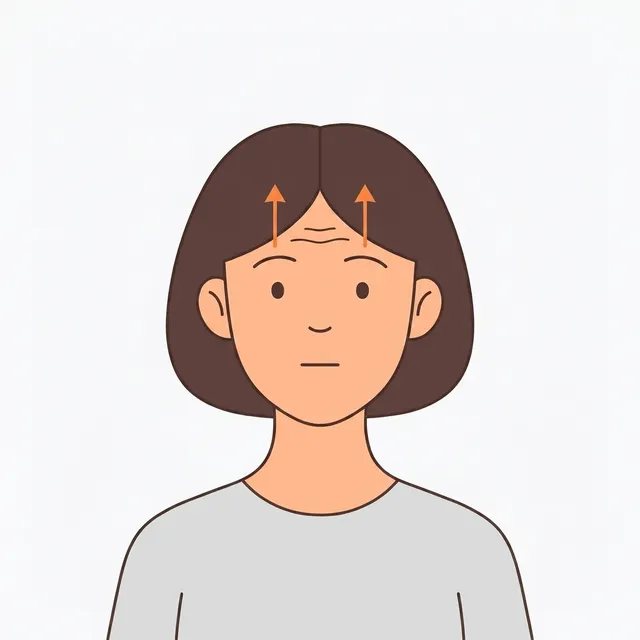
How to do it
- 1
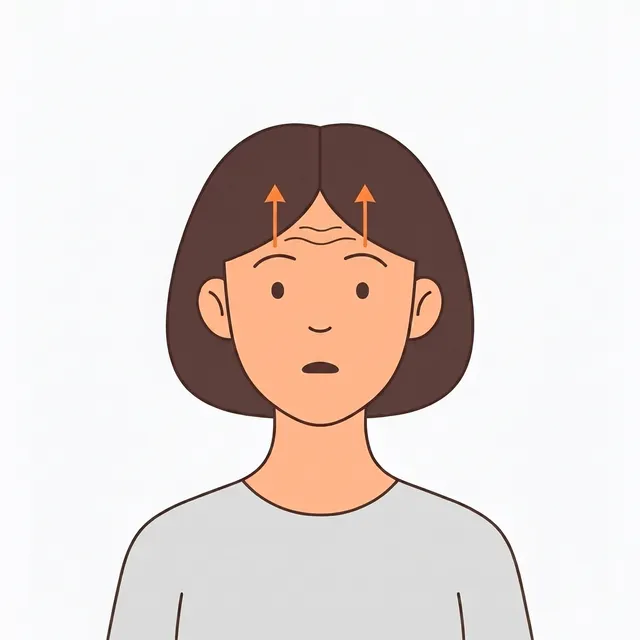
Raise both brows together while watching a mirror.
- 2
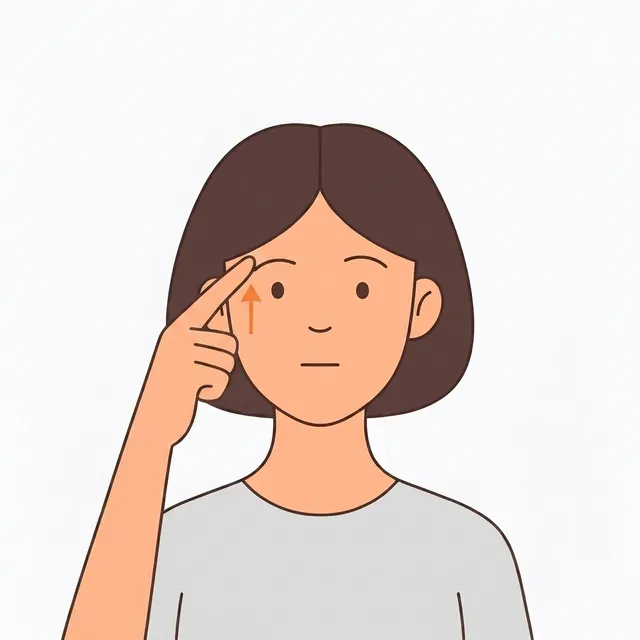
Lightly assist the lower side with a finger.
- 3
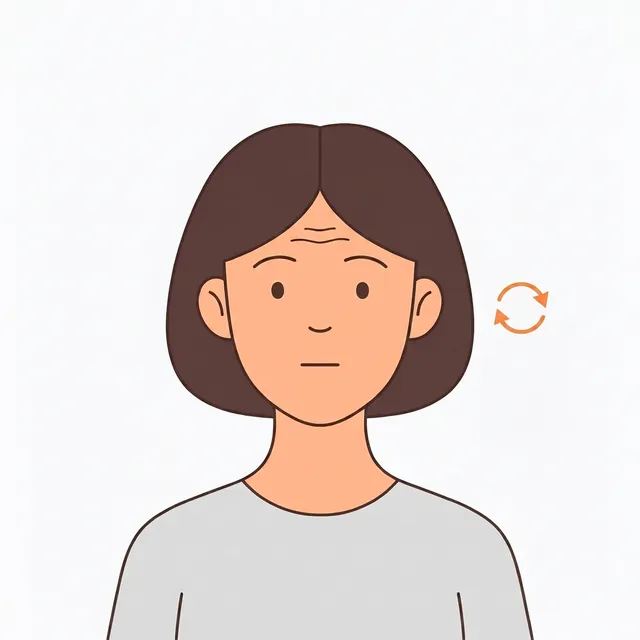
Hold 5 seconds, relax, repeat 10 times.
- 4
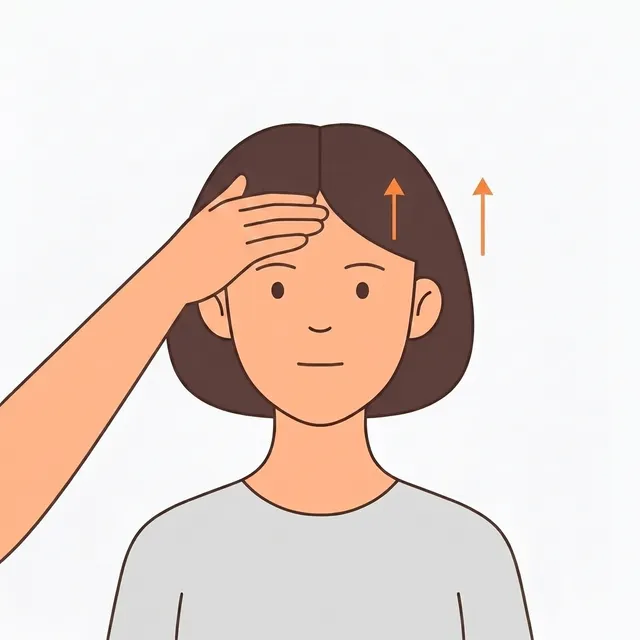
Finish by sweeping your palm up the forehead.
Authorship and evidence
Written by: ALYGN operator · content editor
Content reviewed:
Date of editorial content and source review. This does not represent review by a medical professional.
This exercise is self-care information for functional asymmetry that comes from muscle habits. Individual results and timelines vary, and the listed times and repetitions are not a medical prescription.
- Alam et al. (2018): Facial exercise and the appearance of aging ↗
An uncontrolled pilot reporting appearance ratings in 16 completers over 20 weeks. It does not establish asymmetry correction, the effect of an individual movement, this site’s score, or a timeline for change.
Why it works
Uneven brow heights often come from habitually using one side of the forehead more. Raising both together while assisting the weaker side wakes up the underused frontalis and narrows the movement gap.
Raising one eyebrow is a natural way to signal curiosity or mischief — but repeated for years, it becomes a workload gap between the two sides of your forehead. Muscle-nerve connections smooth out with use: the habitual side gets fluent, the idle side gets clumsy. Eventually, even when you try to raise both equally, one side simply responds first.
Brow height also shapes how large each eye appears. On the side where the brow hangs lower, the lid area looks heavier and the eye reads smaller. When the difference comes from brow height rather than actual eye size, evenly waking the frontalis can narrow the perceived gap.
Muscles involved
The star is the frontalis, the thin broad sheet covering your forehead — the only muscle that lifts the brows. Though it is one sheet, its left and right halves are innervated separately, which is why one side can move alone. Its antagonist, the orbicularis oculi that squints and closes the eyes, pulls brows down — so keeping the eyes relaxed during this exercise matters.
Common mistakes
- Widening your eyes instead — this trains the brows, not the eyelids.
- Pushing hard with the finger — a light guiding touch is all it takes.
- Straining the whole forehead — no need to crease it with maximum effort.
Signs you're doing it right
The lazier side should feel more workout burn, and in the mirror both brows should rise closer to the same height over time.
How often and when
Once a day, two to three minutes at the mirror. This trains control rather than endurance, so more is not better — overdoing it leaves the forehead achy and can bring on headaches. Left-right response speed usually evens out within three to five weeks; the visible height difference follows more slowly.
Once it feels easy
Once simultaneous raises look nearly symmetric, practice raising only the weaker brow: rest a palm lightly on the stronger side to hold it still while the weak side moves alone. When you can control each side independently, your command of the frontalis is essentially complete.
Frequently asked questions
Q. Won't this add forehead wrinkles?
Forehead lines form when the frontalis contracts and the skin folds, so seeing horizontal creases during the exercise is normal. Two or three controlled minutes a day leave a negligible mark next to the unconscious raising and furrowing you do all day. Balanced use also beats a one-sided habit etching lines into just one side.
Q. How do I tell brow droop from a droopy eyelid?
Lift the brow slightly with a finger in front of a mirror. If the eyelid still covers part of the pupil even with the brow raised, the lid itself may be the issue (ptosis) — a matter for an ophthalmologist, not exercise. If the eye opens comfortably once the brow is lifted, brow height is the bigger factor.
Q. I've had Botox — can I still do this?
Forehead Botox temporarily paralyzes the frontalis, so the exercise simply won't work well — and its goal conflicts with what the injection is doing. Starting after the effect wears off (three to four months) makes sense, and your clinic can confirm the timing precisely.
Cautions
- · Reduce reps if forehead wrinkles concern you.