Temple Release
Release the temporalis to ease tension around eyes and cheekbones.
How to do it
- 1
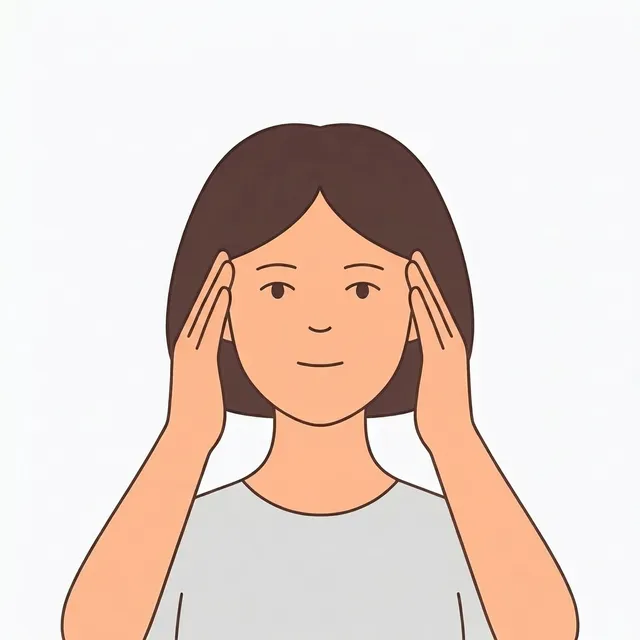
Place the heel of your palms on your temples.
- 2
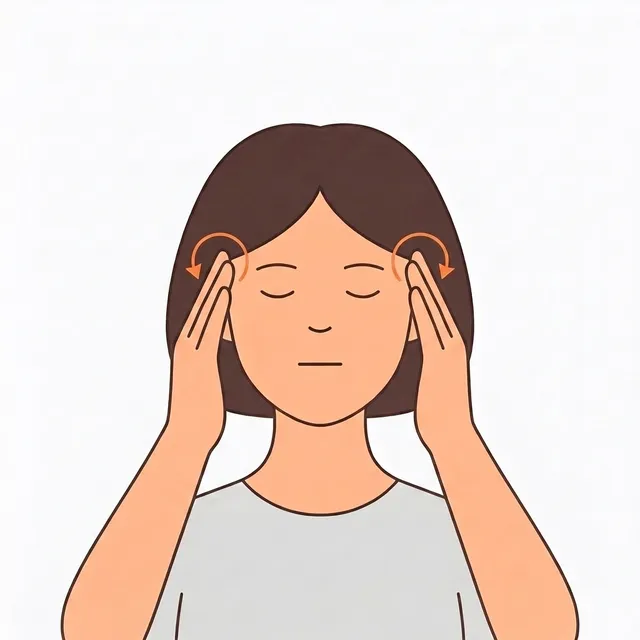
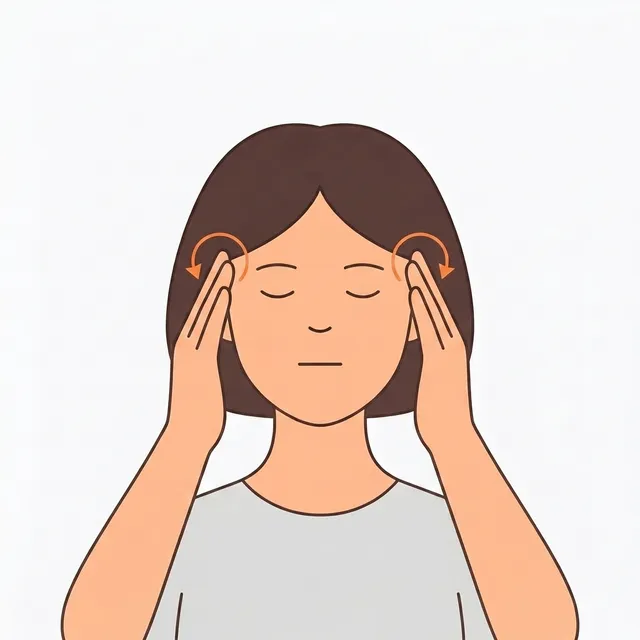
Press gently and make circles (30 seconds).
- 3
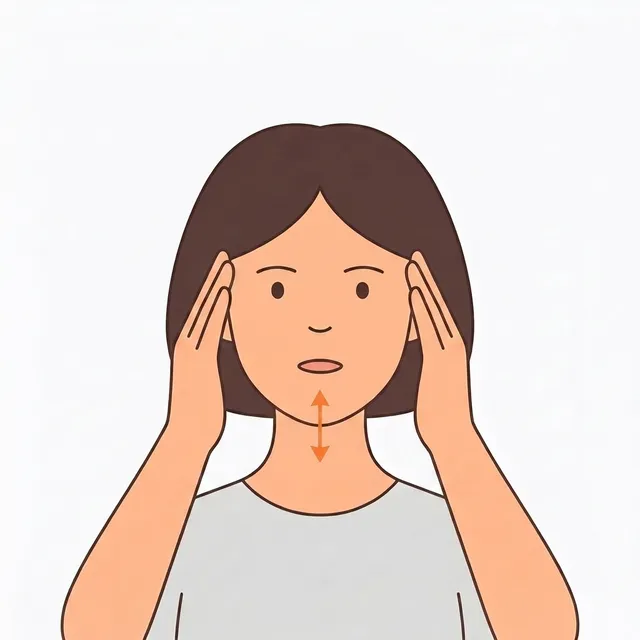
Open and close your mouth to feel the muscle move.
- 4
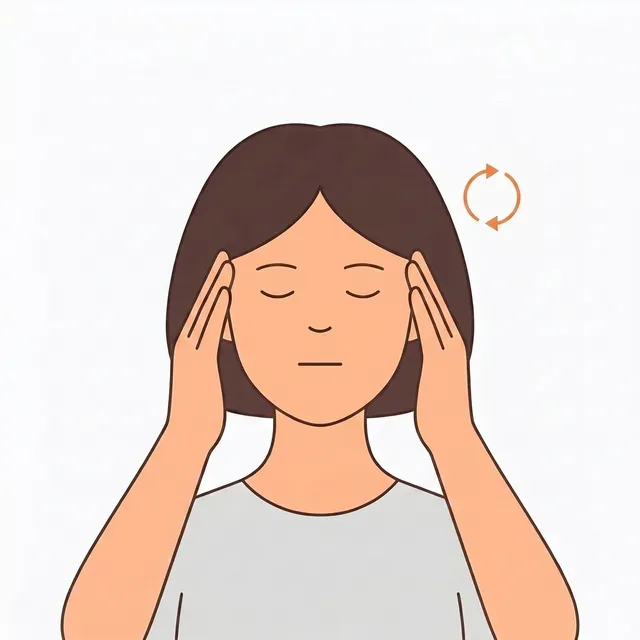
Repeat twice on each side.
Authorship and evidence
Written by: ALYGN operator · content editor
Content reviewed:
Date of editorial content and source review. This does not represent review by a medical professional.
This exercise is self-care information for functional asymmetry that comes from muscle habits. Individual results and timelines vary, and the listed times and repetitions are not a medical prescription.
- NIDCR: Temporomandibular Disorders ↗
Background on jaw pain, locking, painless sounds, and conservative care. It does not validate this site’s individual movements or asymmetry correction.
Why it works
The temporalis at your temples is also a chewing muscle — one-sided chewing or clenching knots up one side. That tension tugs on the eye area, so releasing it loosens the whole region around the eyes.
The temporalis fans out from the temple to cover a wide swath of the side of your head. Together with the masseter it is one of the two great jaw-closing muscles — and it absorbs clenching and one-sided chewing habits just the same. Massaging the masseter while skipping the temporalis manages only half of your chewing musculature.
Temporalis tension also touches your appearance. Its front fibers neighbor the tissue around the brow and outer eye, so a knotted side can subtly tug at that eye area. It is also no coincidence that tension headaches so often start at the temples. Release it, and the eye area and side of the head lighten together.
Muscles involved
The target is a single muscle, but a broad one. Clench and release with fingers on your temple and you feel it bulge — yet it extends above and behind the ear. That size is why the broad heel of the palm works better than fingertips. Dividing it into three zones — front (beside the brow), middle (above the ear), rear (up behind the ear) — ensures full coverage.
Common mistakes
- Poking with fingertips — use the broad heel of your palm instead.
- Clenching while massaging — keep molars slightly apart so the muscle can release.
- Stopping after a few seconds — the temporalis is broad; give it the full 30 seconds.
Signs you're doing it right
Your temples should feel pleasantly released, with the looseness spreading to your eyes and forehead.
How often and when
Once or twice a day, two to three minutes. Two prime slots: the evening after long screen work (when eye strain and temporalis tension have accumulated together) and before bed (heading off nighttime clenching). Keep your molars slightly apart throughout so the muscle can actually release. Knots ease within days; left-right tension differences shift over weeks.
Once it feels easy
Comfortable with the pressure? Add two upgrades. First, slowly open and close your mouth while the palm heel stays in place — releasing the muscle as it moves reaches deeper. Second, find a knot and hold steady pressure for 10 seconds; for deep knots, sustained pressure on one point beats rubbing across it.
Frequently asked questions
Q. Does this help headaches?
For tension headaches that start as a squeezing feeling at the temples, temporalis release can ease symptoms — but it is management, not treatment. See a doctor if headaches grow frequent, painkiller use creeps up, or a severe one hits suddenly. A "worst headache of my life" is an emergency sign.
Q. My temples look hollow — could massage cause that?
No. Temple hollowing comes mainly from age- or weight-loss-related fat and tissue changes — release massage does not shrink muscle or fat. Conversely, heavy grinders can develop an enlarged temporalis that makes the temples bulge; even then, massage relieves tension without meaningfully changing volume.
Q. I hear sounds near my ear while massaging.
Clicking in front of the ear while opening and closing is usually the jaw-joint disc moving. Painless clicking is rarely a concern, but check that your pressure is not landing on the joint itself — the temple zone sits above the joint in front of the ear. If there is pain, stop and get it examined.
Cautions
- · Stop if a headache worsens.