Symmetric Smile Practice
Practice raising both mouth corners to the same height in a mirror.
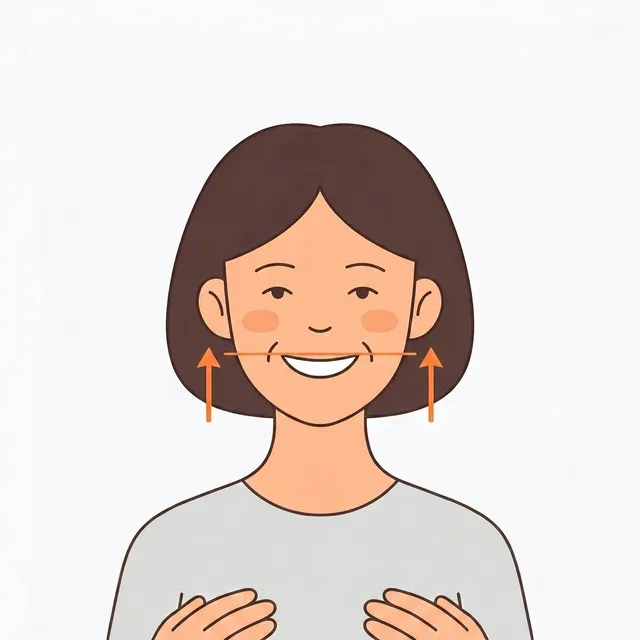
How to do it
- 1
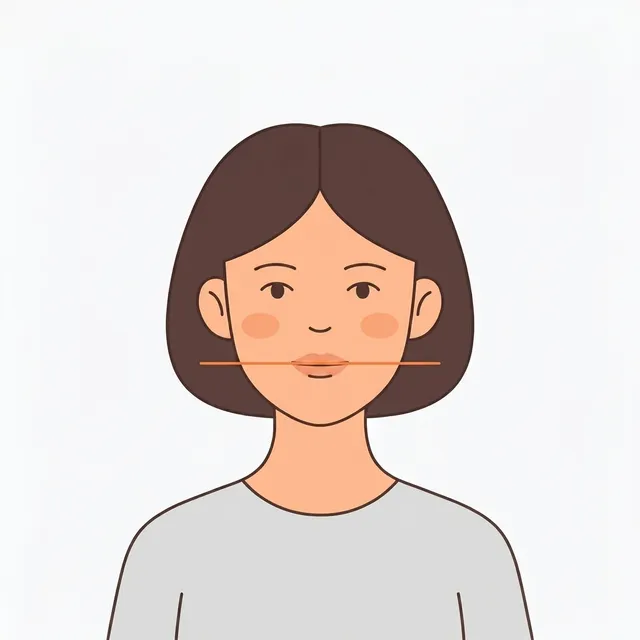
Start with a neutral face in front of a mirror.
- 2
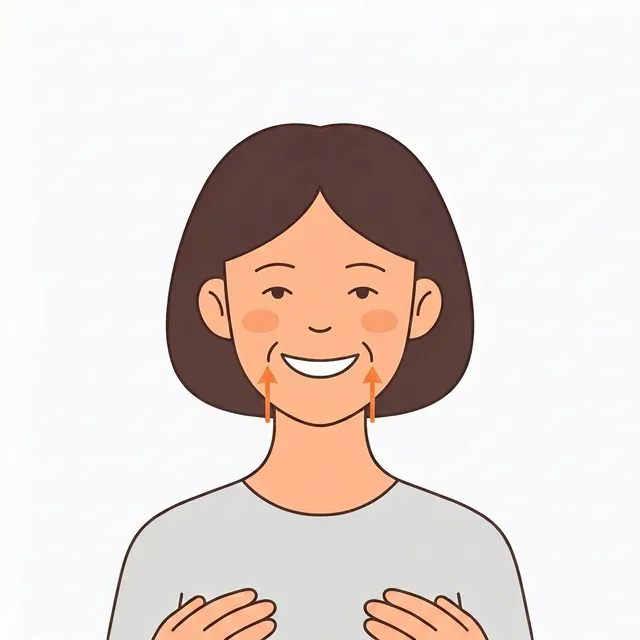
Slowly raise both mouth corners together.
- 3
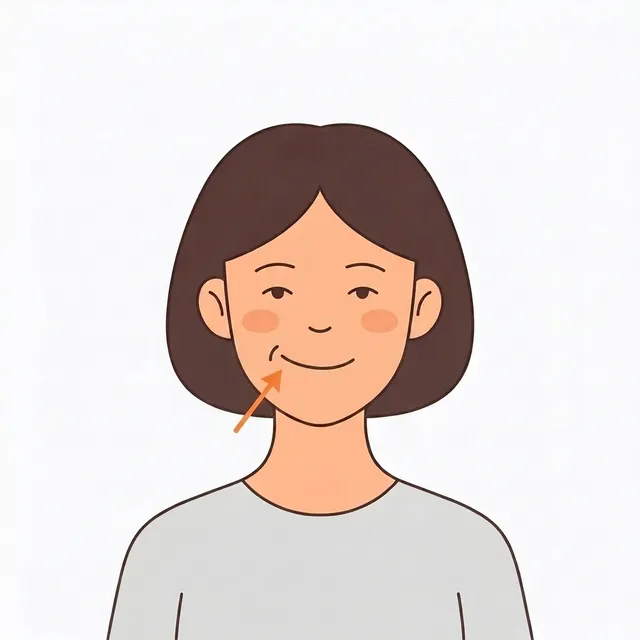
Focus on the lower corner to match heights.
- 4
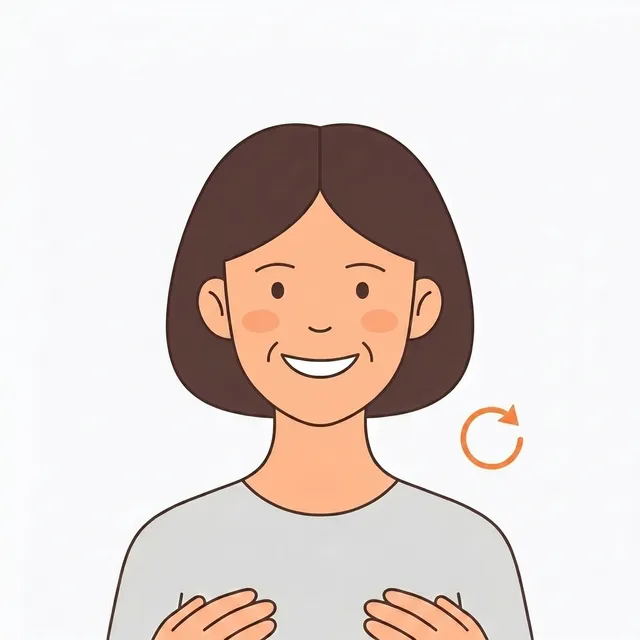
Hold 10 seconds × 8 reps.
Authorship and evidence
Written by: ALYGN operator · content editor
Content reviewed:
Date of editorial content and source review. This does not represent review by a medical professional.
This exercise is self-care information for functional asymmetry that comes from muscle habits. Individual results and timelines vary, and the listed times and repetitions are not a medical prescription.
- Alam et al. (2018): Facial exercise and the appearance of aging ↗
An uncontrolled pilot reporting appearance ratings in 16 completers over 20 weeks. It does not establish asymmetry correction, the effect of an individual movement, this site’s score, or a timeline for change.
Why it works
Expressions are trained habits. Practicing a symmetric smile with mirror feedback re-teaches the brain-muscle connection, so lifting your weaker corner gradually becomes natural.
A smile is not innate — it is a motor pattern learned through tens of thousands of repetitions. Always showing the same side of your face to cameras, chewing on one side and building that musculature, even habitually smiling at someone who always sat on the same side — small asymmetric habits accumulate into the left-right difference of "your smile."
Being learned also means it can be relearned. Practicing a near-symmetric smile slowly in front of a mirror gradually rebalances the signals your brain sends to each corner of the mouth. The mechanism is the same motor learning that fixes a golf swing: accurate repetitions paired with visual feedback.
Muscles involved
The lead actor is the zygomaticus major, running from the cheekbone to the mouth corner. Supporting roles go to the zygomaticus minor, the risorius pulling the corner sideways, and the levator anguli oris lifting it upward. The development and attachment points of these muscles differ from person to person — which is why every smile is unique, and why the two sides differ.
Common mistakes
- Practicing without a mirror — visual feedback is the whole point of this exercise.
- Forcing a full grin that tenses the whole face — move only the corners, slowly.
- Pushing harder with the stronger side — focus on raising the lower corner.
Signs you're doing it right
The weaker corner should tire first, and a symmetric smile should feel less awkward after each session.
How often and when
Five minutes a day at the mirror — attached to a moment you are already there, like after washing up or brushing teeth — is the most sustainable. Motor patterns typically shift over four to eight weeks. For a checkpoint, take a front-facing photo under the same conditions once a week, or track your mouth-corner metric in ALYGN.
Once it feels easy
Try forming a symmetric smile without the mirror, then check yourself. If what you built by feel is actually symmetric, the pattern is taking hold. Next, extend holds to 10 seconds — and eventually record video in real situations, chatting or genuinely laughing, to see whether the new pattern shows up unprompted.
Frequently asked questions
Q. Why does only one corner rise when I smile?
Usually it is a muscle-habit difference, not a disorder. The exception: if one corner suddenly stopped moving, that is different — acute facial asymmetry can signal a facial nerve problem (like Bell's palsy) and needs immediate medical attention. This exercise applies only to differences that built up gradually.
Q. Won't practicing add expression wrinkles?
Five minutes of practice is negligible next to the expressions you make unconsciously all day. If anything, a one-sided smile habit concentrates creasing on that side — balancing it distributes the load. Follow the guide of moving only the corners, not tensing the whole face, and it is not a concern.
Q. It doesn't seem to work. How long should I keep at it?
Expression patterns change more slowly than most motor learning. If eight weeks of five-plus sessions weekly show zero difference in photo comparisons, the height gap may stem from bone structure or dental occlusion rather than muscle habit — in which case an orthodontist or oral surgeon will give you a more accurate answer.
Cautions
- · Rest briefly if your face cramps.