Sleep Posture Routine
Fix one-sided sleeping habits to prevent pressure asymmetry.
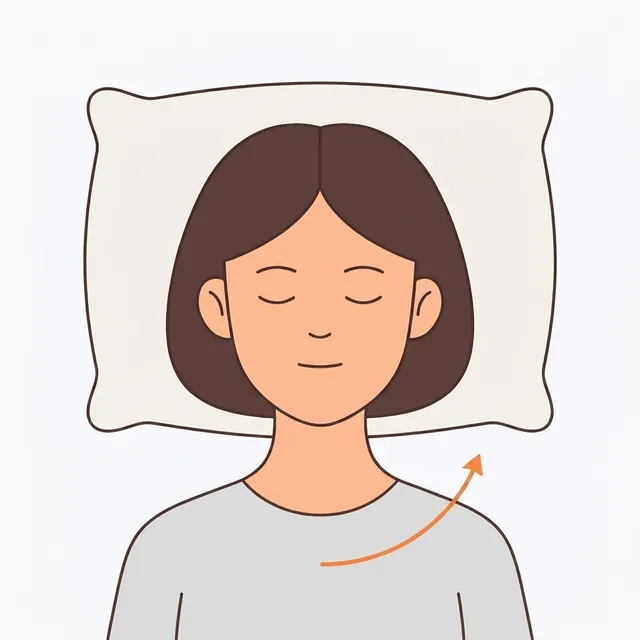
How to do it
- 1
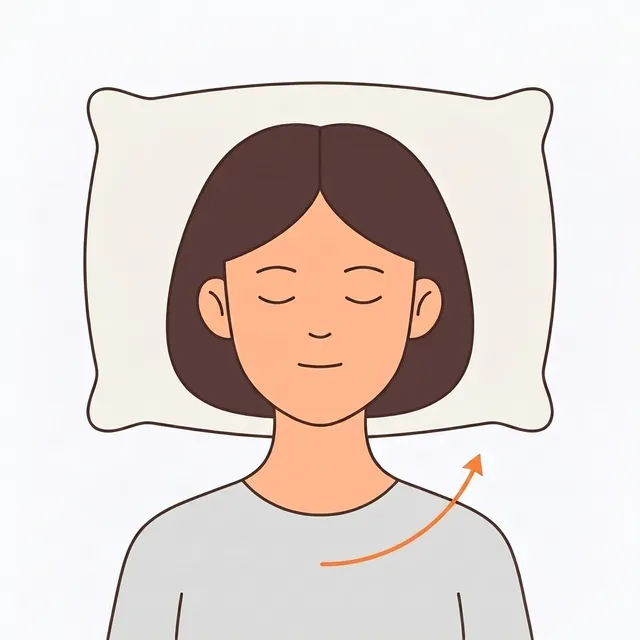
Practice lying on your back before sleep.
- 2
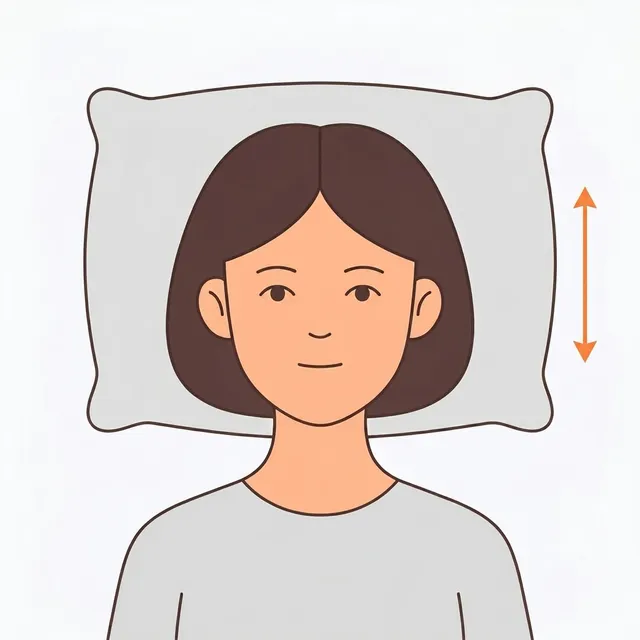
Adjust pillow height so your neck stays neutral.
- 3
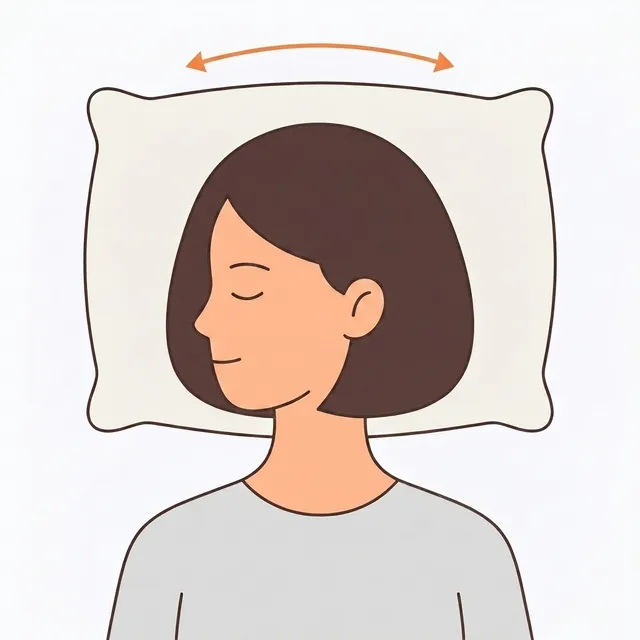
If you must side-sleep, alternate sides.
- 4
Log which side you slept on to spot patterns.
Authorship and evidence
Written by: ALYGN operator · content editor
Content reviewed:
Date of editorial content and source review. This does not represent review by a medical professional.
This exercise is self-care information for functional asymmetry that comes from muscle habits. Individual results and timelines vary, and the listed times and repetitions are not a medical prescription.
- NHLBI: Sleep apnea treatment ↗
Explains individualized sleep-apnea care, including position. It does not support back sleeping for everyone or correcting asymmetry through sleep position.
- NHS: Neck pain and stiff neck ↗
General information on neck comfort and seeking care for persistent symptoms. It does not show that neck or shoulder movement changes the facial midline or symmetry.
Why it works
Side-sleeping presses one side of your face for 6–8 hours nightly. The same side every night makes that pressure a cumulative asymmetry factor. Back-sleeping or alternating sides removes or evens out the load.
Sleep is when your face endures external pressure the longest and hardest. Side-sleeping loads much of your head's weight onto the pillow-side face — now imagine that repeating 6–8 hours a night, on the same side, for years. No daytime habit comes close in total exposure. That is why sleep position ranks so high in asymmetry management.
Stomach-sleeping is worse still: the face is pressed directly, and breathing forces the head into full rotation to one side — locking neck twist and facial pressure in the same direction all night. Back-sleeping is the only position with zero facial pressure, which is why it is this exercise's end goal.
Muscles involved
The target here is not a muscle but your sleep environment and unconscious habit. Physical setup still matters — back-sleeping only feels comfortable with the right pillow height, meaning one that keeps the neck's natural curve, usually lower than people expect. Side-sleeping needs the opposite: shoulder-width height. If you alternate, a pillow with different heights by zone is the practical tool.
Common mistakes
- Trying to change overnight — sleep posture shifts gradually over weeks.
- Using a too-high pillow — a bent neck creates its own asymmetry problem.
- Judging by feel without logging — note which side you woke on to see the real pattern.
Signs you're doing it right
Fewer pillow marks and less one-sided puffiness in the morning — plus a fresher neck — mean your posture is improving.
How often and when
You control how you fall asleep, not how you toss afterward — so the strategy is "fix the starting position, design the environment." Start on your back every night; if you must side-sleep, start on the opposite side from your usual. Jot down each morning which position you woke in, and your pattern emerges within two weeks. Genuinely shifting the habit takes three to six weeks.
Once it feels easy
Once the starting position sticks, design for the tossing too: a long pillow or cushion behind your back gently blocks a full roll onto the habitual side mid-sleep. Committed side-sleepers can put a cushion between the knees, easing neck and pelvis strain and making side-sleeping itself less costly.
Frequently asked questions
Q. Back-sleeping is so uncomfortable I can't fall asleep.
Forcing it costs you sleep quality, which is the bigger loss. Go stepwise: lower your pillow first (a tall pillow makes back-sleeping especially awkward), and put a cushion under your knees — it relaxes the lower back and makes the position easier to hold. If it still fails, alternating sides nightly is the realistic second-best.
Q. Will changing position reverse asymmetry I already have?
No guarantees. What is certain: you remove one ongoing driver, and the reversible parts — puffiness, soft-tissue compression — can improve within weeks. How far long-accumulated change rebounds varies by person; tracking monthly trends in ALYGN is the honest way to find out.
Q. What about naps? I sleep face-down at my desk.
Desk face-down naps concentrate body weight on one side of the face and jaw — brief but high-pressure. Repeated daily, they rival night sleep as a factor. Switch to a forehead-support travel pillow on the desk, or recline with a neck cushion. If the same cheek lands on the same arm every day, that is your first correction.
Cautions
- · Don't force changes if you have a sleep disorder.