Shoulder Leveling
Level tilted shoulders — a root cause of facial tilt.

How to do it
- 1
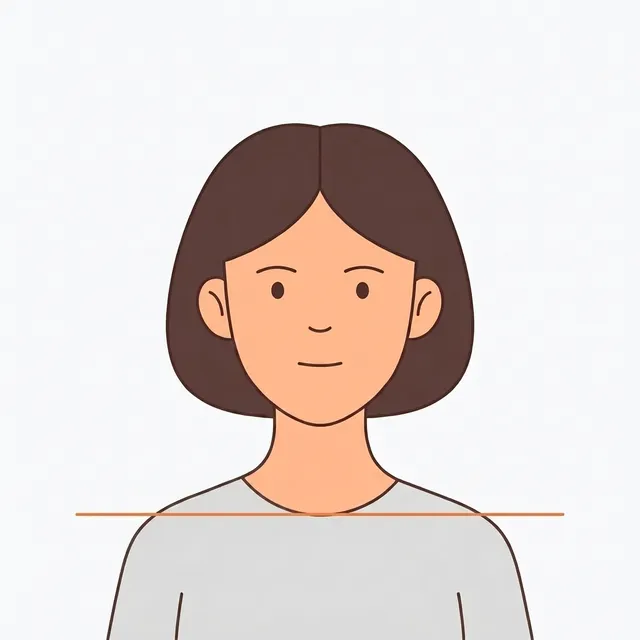
Check your shoulder heights in a mirror.
- 2
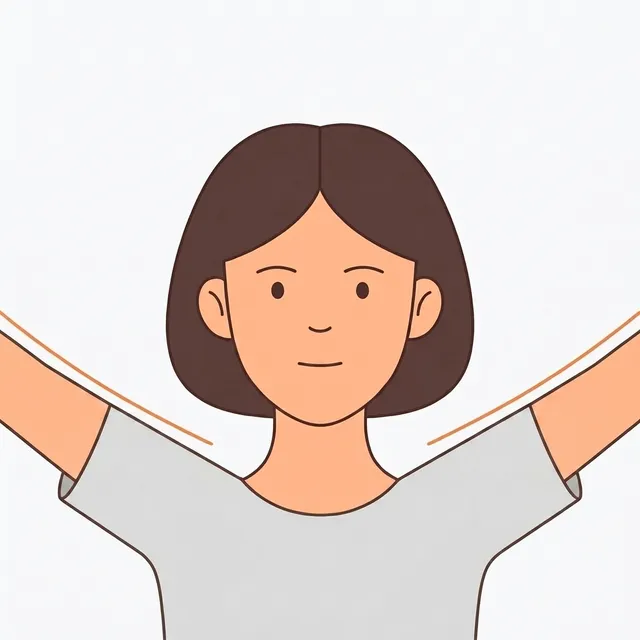
Raise both arms sideways to level.
- 3
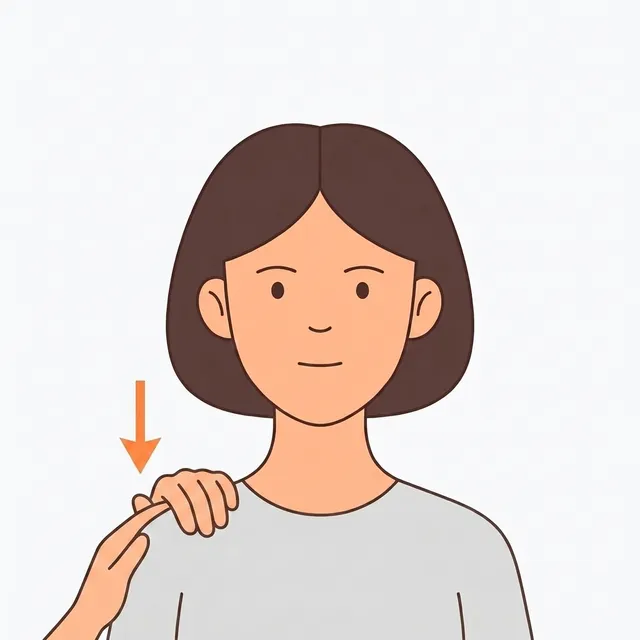
Lower the higher shoulder and hold 10 seconds.
- 4
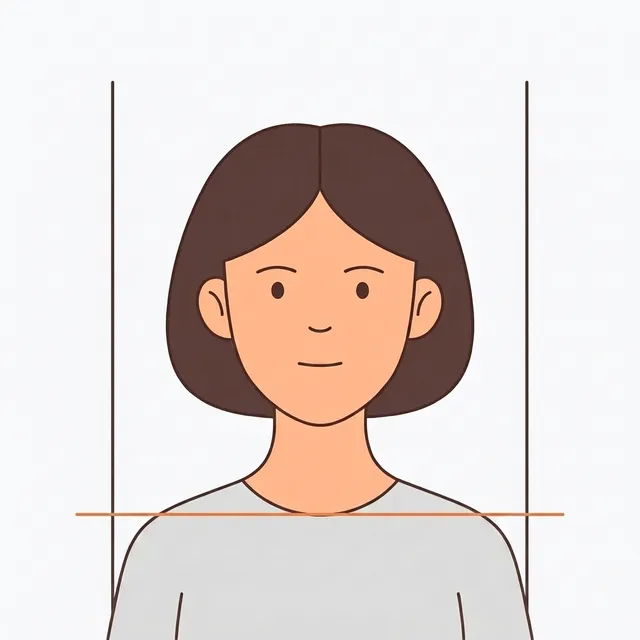
Stand aligned against a wall for 1 minute.
Authorship and evidence
Written by: ALYGN operator · content editor
Content reviewed:
Date of editorial content and source review. This does not represent review by a medical professional.
This exercise is self-care information for functional asymmetry that comes from muscle habits. Individual results and timelines vary, and the listed times and repetitions are not a medical prescription.
- NHS: Neck pain and stiff neck ↗
General information on neck comfort and seeking care for persistent symptoms. It does not show that neck or shoulder movement changes the facial midline or symmetry.
Why it works
Tilted shoulders tilt the neck and head above them. Face-level fixes revert easily if the foundation stays crooked — leveling the shoulders is the root work for facial tilt.
The body stacks like a tower of blocks: when a lower level tilts, the level above leans the opposite way to keep from toppling. A dropped shoulder makes the neck curve back the other way, and the head above it tips again to compensate. That is why the facial tilt you see in the mirror so often originates not in the face but in the shoulders or pelvis.
Shoulder tilt is mostly the product of daily loading: the bag always on one shoulder, leaning on one armrest, mouse-arm tension, the phone pinched against the same ear. Repeated on the same side daily, these loads shorten the muscles around one shoulder while the other side lengthens. The wall-alignment drill acts as a daily reference point that resets the lean.
Muscles involved
Shoulder height hinges on the upper trapezius running from neck to shoulder and the levator scapulae hoisting the shoulder blade. One-sided tension there hikes or stiffens that shoulder. Standing against the wall simultaneously opens the pectoralis minor at the front and wakes the lower trapezius and serratus anterior that anchor the shoulder blade downward — lowering the raised side while strengthening the muscles that keep it down.
Common mistakes
- Over-arching your back at the wall — head, upper back, and hips should touch naturally.
- Yanking the high shoulder down into pain — a gentle sustained hold is the key.
- Skipping the mirror check — you cannot feel true level without seeing it.
Signs you're doing it right
Both shoulders touching the wall at equal height, with your neck feeling taller — alignment is taking hold.
How often and when
One minute morning and evening, plus a midday round on desk days — two to three times daily. Half of this exercise is sensory recalibration: hold a tilt long enough and it starts to feel level, so you need external references — the wall, the mirror — to retune your body's sense of straight. Expect the felt sense to shift in two to three weeks, and photographic shoulder level over one to two months.
Once it feels easy
Once wall alignment feels routine, swap out the causal habits in parallel — switching to a backpack, or alternating carrying sides daily, removes most of the relapse pressure. The exercise itself progresses to the wall angel: back against the wall, arms raised and lowered in a W shape, the standard next step for coordinating the full shoulder-blade musculature.
Frequently asked questions
Q. Isn't a small shoulder-height difference normal?
Yes — a slightly lower shoulder on your dominant-arm side is common, and small differences need no fixing. The signals worth acting on: a visibly growing gap, recurring pain in one side of the neck or shoulder, or clothes that always slip off the same side. This exercise is for reversing that kind of lifestyle-driven tilt.
Q. Can I do this with scoliosis?
If you have diagnosed scoliosis, do not rely on this alone. Scoliotic shoulder tilt is structural, driven by the spinal curve — general drills like wall alignment can support but not correct it. Get the curve assessed by a physiatrist or orthopedist and use this as part of a prescribed program.
Q. The back of my head won't reach the wall.
A classic sign of forward head posture. Don't force contact by craning your neck back — just hold a chin tuck at whatever distance you reach. Repeat daily and the gap shrinks; that distance is itself your progress gauge. Pairing this with the chin-tuck exercise speeds it up.
Cautions
- · Reduce range if your shoulder hurts.