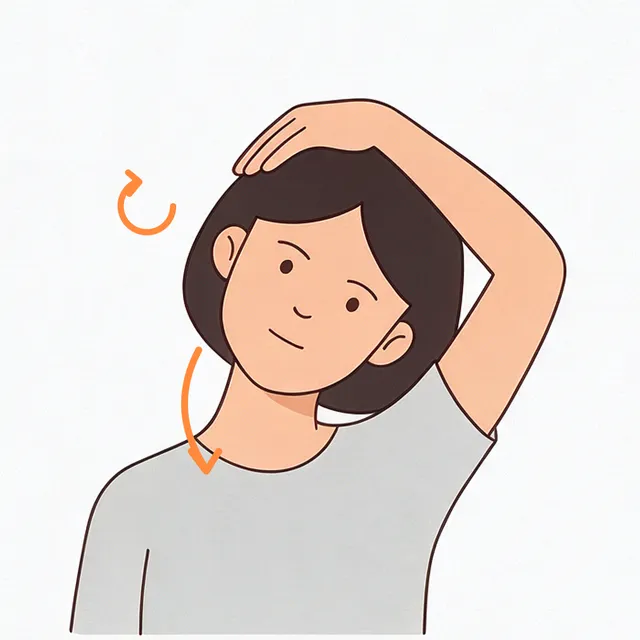
Lateral Neck Stretch
Release tilted neck muscles to improve facial tilt.
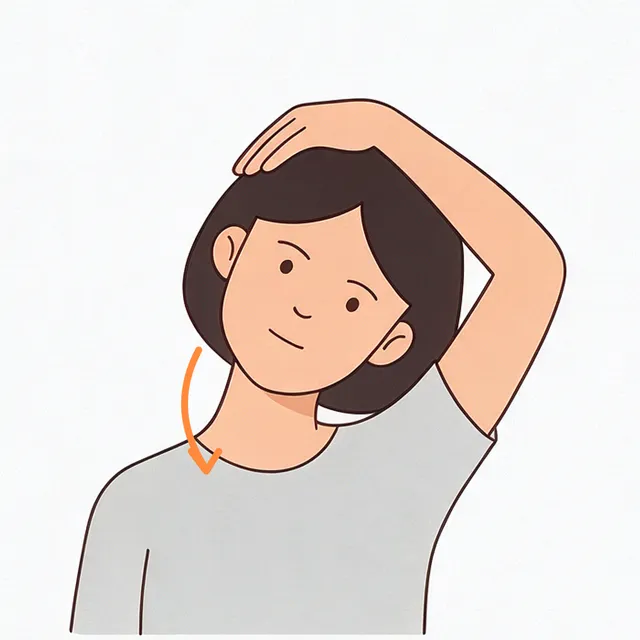
Shown as in a mirror — left and right mean your own left and right
How to do it
- 1
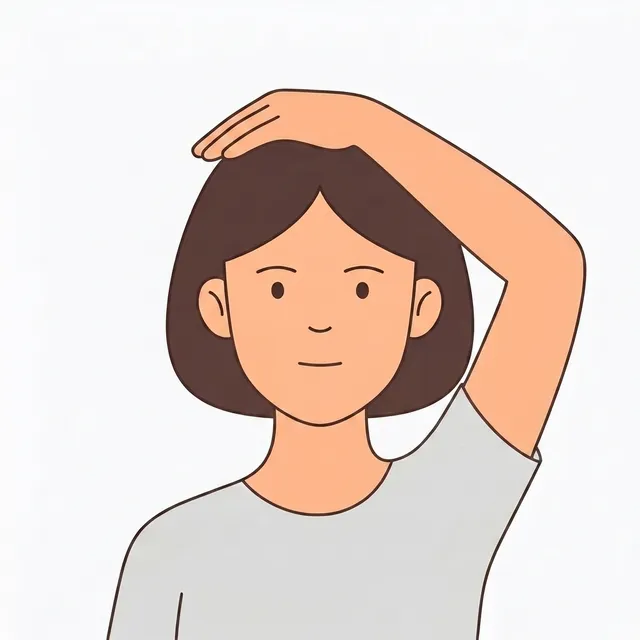
Place your right hand on the left side of your head.
- 2
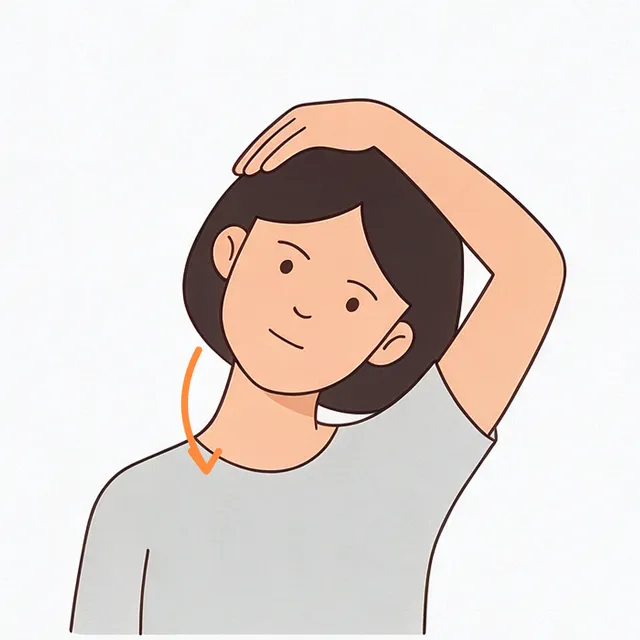
Gently pull your head right and hold 15 seconds.
- 3
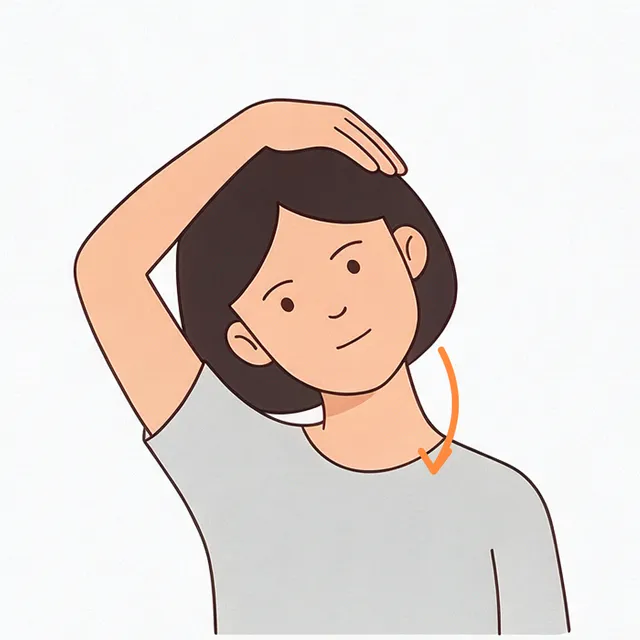
Repeat on the other side.
- 4
Add one extra rep on the stiffer side.
Authorship and evidence
Written by: ALYGN operator · content editor
Content reviewed:
Date of editorial content and source review. This does not represent review by a medical professional.
This exercise is self-care information for functional asymmetry that comes from muscle habits. Individual results and timelines vary, and the listed times and repetitions are not a medical prescription.
- NHS: Neck pain and stiff neck ↗
General information on neck comfort and seeking care for persistent symptoms. It does not show that neck or shoulder movement changes the facial midline or symmetry.
Why it works
When neck muscles shorten on one side, your head tilts that way — creating a facial tilt that reads as uneven eyes. Stretching the short side lets your head return to vertical, easing tilt-based asymmetry.
Among people whose ALYGN results repeatedly flag uneven eye heights, a large share have a tilted head rather than uneven eyes. Just five degrees of head tilt makes the line between your pupils visibly slanted in photos — and the usual culprit behind head tilt is a left-right length difference in the side-neck muscles.
The difference is manufactured by daily life: the bag always on the same shoulder, a monitor sitting off-center, the phone held to the same ear, the same hand propping your chin at a café — all postures that keep one side of the neck short. Stretching directly restores the shortened side; auditing those habits keeps it from coming back.
Muscles involved
The targets: the sternocleidomastoid running diagonally from behind the ear to the collarbone, the upper trapezius from neck to shoulder, and the deeper levator scapulae and scalenes. Shortened on one side, they pull the head toward it. Which muscle stretches most depends on the angle of the tilt — pointing your nose toward your armpit, for instance, shifts the emphasis — so varying the angle covers the group evenly.
Common mistakes
- Letting the stretched-side shoulder rise — anchor that hand under your chair.
- Bouncing the stretch — the muscle tightens defensively instead of releasing.
- Pulling to the point of pain — holding at a comfortable stretch works better.
Signs you're doing it right
You should feel a pleasant lengthening along the neck, and your head should sit straighter in the mirror afterward.
How often and when
Hold 30 seconds, two to three reps per side, twice a day (morning and evening) — plus a midday round on long desk days. Always favor the short side (the side your head tilts toward): equal time both sides, then one extra rep for the short one. Your neck feels lighter immediately, but a visible change in head tilt takes four to six weeks alongside habit fixes.
Once it feels easy
Once stretching feels routine, add strengthening on the opposite side — the muscles there are often lengthened and weak. With your head vertical, press a palm against your temple and resist isometrically (10 seconds × 5). "Stretch the short side, strengthen the long side" is the complete formula for tilt correction.
Frequently asked questions
Q. How do I know which side to stretch?
Take a front photo and draw a line through both pupils. If the line drops to the right, your head tilts right — and the shortened side to stretch is the right side of your neck. ALYGN's eye-height and tilt metrics quantify this for you. If still unsure, stretching both sides equally loses you nothing.
Q. My fingers tingle during the stretch.
Ease off immediately. The nerve bundle running down the side of the neck can get compressed or overstretched, showing up as arm or hand tingling. Reduce the angle and tilt using only your head's weight, no hand pull. If tingling keeps recurring, it may signal nerve compression such as a cervical disc issue — get it checked.
Q. I've been told my head has tilted since birth.
If infant torticollis (a congenitally short sternocleidomastoid) has persisted, general stretching alone may not correct it. Structural tilt carried into adulthood warrants evaluation by a physiatrist or orthopedist — use this exercise as a supplement to prescribed rehab, not a substitute.
Cautions
- · Pull slowly without bouncing.