Wide Mouth Opening Stretch
Increase jaw mobility to counter one-sided chewing habits.
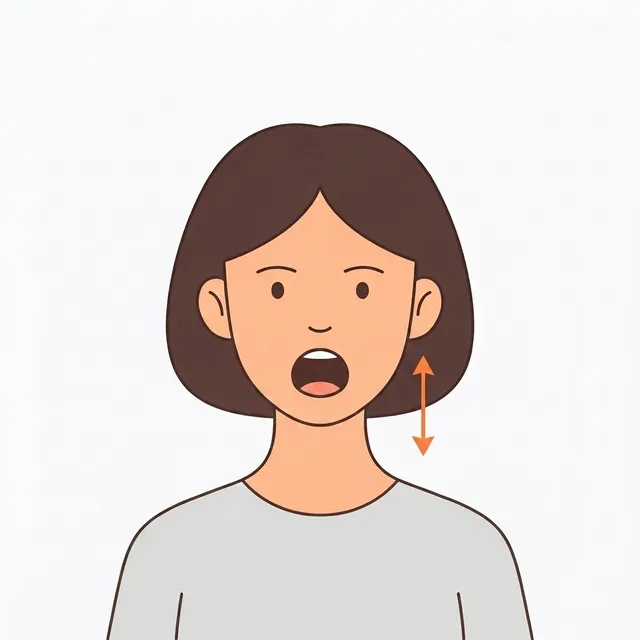
How to do it
- 1
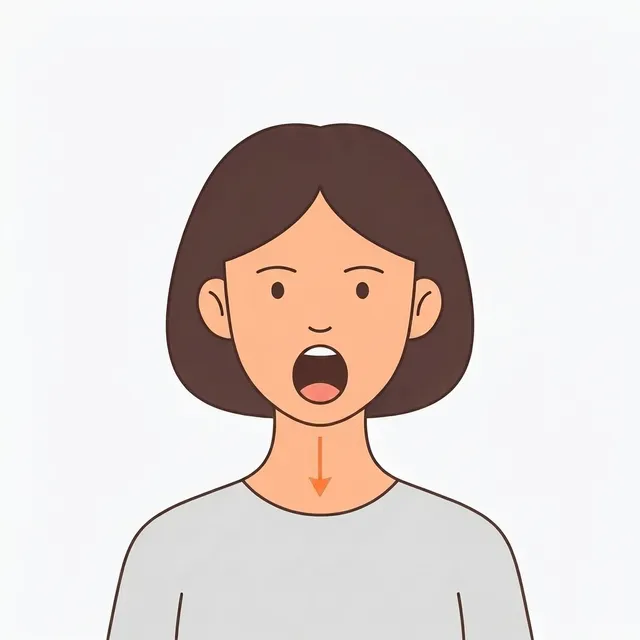
Slowly open your mouth as wide as comfortable.
- 2
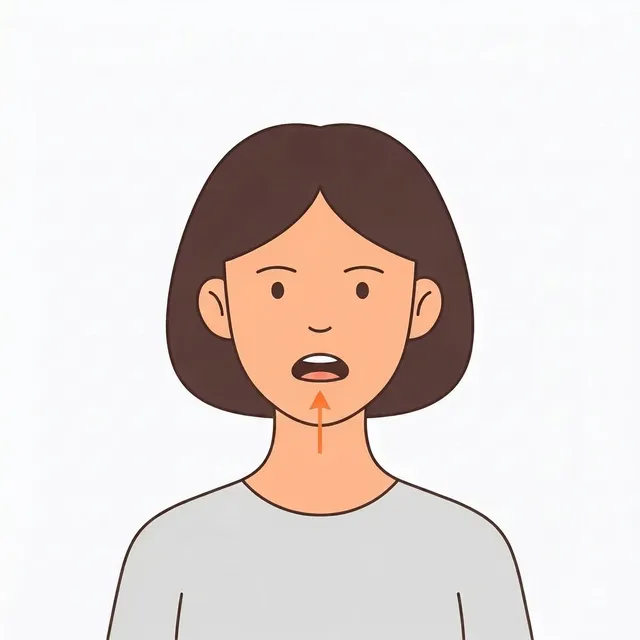
Hold 5 seconds, then close slowly.
- 3
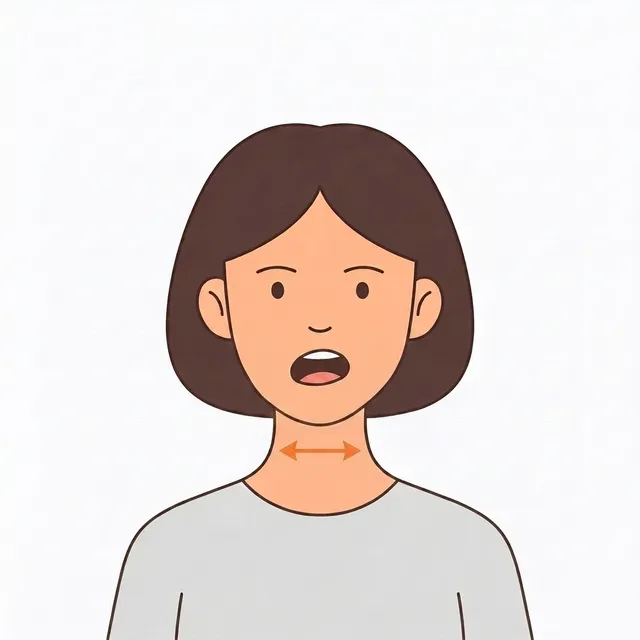
Move your jaw side to side, 5 times each.
- 4
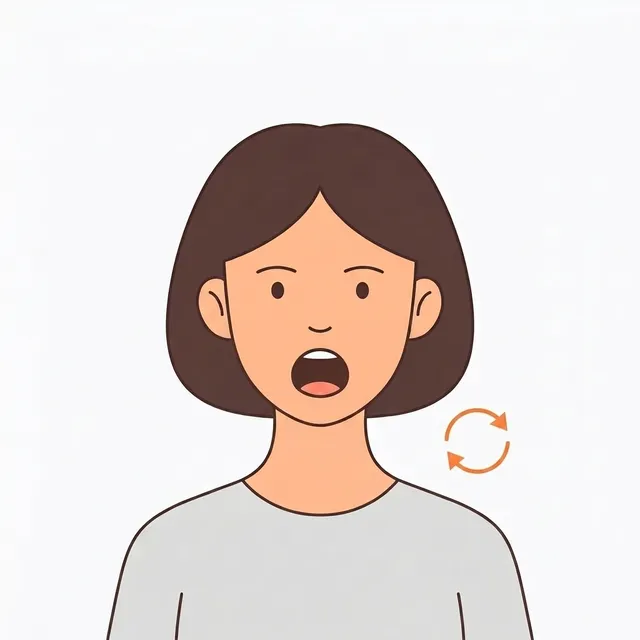
Repeat for 3 sets.
Authorship and evidence
Written by: ALYGN operator · content editor
Content reviewed:
Date of editorial content and source review. This does not represent review by a medical professional.
This exercise is self-care information for functional asymmetry that comes from muscle habits. Individual results and timelines vary, and the listed times and repetitions are not a medical prescription.
- NIDCR: Temporomandibular Disorders ↗
Background on jaw pain, locking, painless sounds, and conservative care. It does not validate this site’s individual movements or asymmetry correction.
Why it works
One-sided chewing reduces mobility in the opposite joint and muscles. Practicing full opening and side-to-side movement restores an even range of motion on both sides — the foundation for fixing chewing habits.
The jaw joint is unique: its left and right joints are welded to a single bone, so they must always move together. When muscles on one side stiffen, even the opposite joint is forced into an abnormal track. If your jaw zigzags to one side as you open, the left-right mobility gap is already showing in the movement itself.
A healthy adult mouth opens about three stacked fingers wide (roughly 40–50 mm). When that range shrinks, or sideways glide is narrower in one direction, shortened muscles are more often the cause than the joint itself — and stretching is the standard approach to restoring muscle-based limits.
Muscles involved
The targets are the closing muscles: the masseter, the temporalis at the temple, and the medial pterygoid deep behind the cheekbone. All three deliver powerful closing force and shorten easily with clenching habits. The sideways glide additionally wakes the lateral pterygoid — a muscle too deep to touch, trainable only through movement.
Common mistakes
- Forcing wider through pain — go only to a comfortable maximum.
- Snapping open and shut — that stresses the joint. Move slowly.
- Turning your head along with the jaw slide — keep your face pointing forward.
Signs you're doing it right
You should feel an even stretch in front of both ears, with opening becoming smoother each set.
How often and when
Twice a day, one set each morning and evening. If your jaw is stiffest on waking, right after getting up is a good slot — and doing it during or after a warm shower, with muscles warmed, deepens the stretch. Range improves noticeably in two to three weeks; straightening a zigzag opening path takes longer.
Once it feels easy
Once three fingers fit without pain, add a 5-second hold at full opening. For the glide, assign one or two extra reps to the stiffer direction — asymmetric training is what restores symmetry. Finish by practicing the straightest possible opening in a mirror to retrain the path itself.
Frequently asked questions
Q. My jaw clicks when opening — should I continue?
A painless click, usually the joint disc slipping, is common and does not rule out gentle stretching. But stop and see a dentist or oral-medicine specialist first if the click comes with pain, if your jaw ever locks, or if the sound is getting louder. This exercise is for prevention and maintenance — it is not treatment.
Q. I'm in orthodontic treatment — is this okay?
Gentle opening stretches are usually fine, but if you wear appliances or inter-arch elastics, the sideways glide may load them. Orthodontic plans vary too much for a general answer — show this exercise to your orthodontist at the next visit and confirm.
Q. My jaw feels more tired after stretching.
Check two things. First, are you opening past the comfortable maximum? Beyond it, muscles guard and tighten defensively. Second, are you unconsciously clenching afterward? End each session in the resting posture — tongue on the palate, molars slightly apart — and the fatigue should not linger.
Cautions
- · Stop immediately if your jaw clicks or hurts.