Jaw Side Slide
Slide your lower jaw side to side to balance mobility.
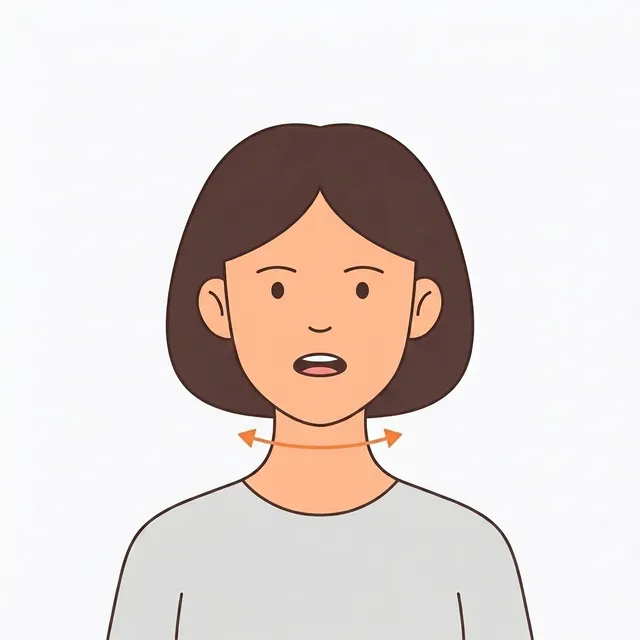
Shown as in a mirror — left and right mean your own left and right
How to do it
- 1
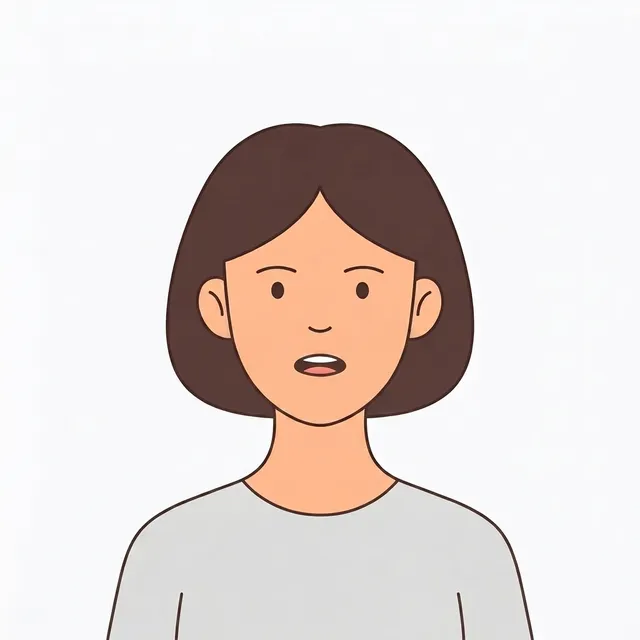
Open your mouth slightly and relax.
- 2
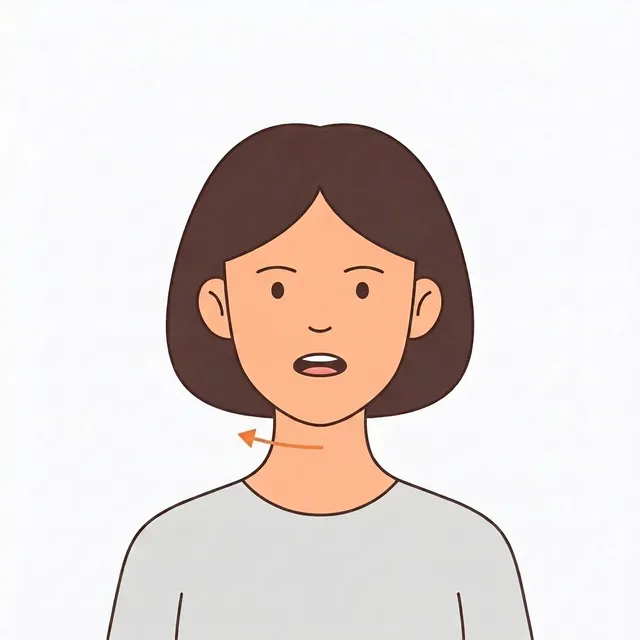
Slide your jaw left slowly and hold 3 seconds.
- 3
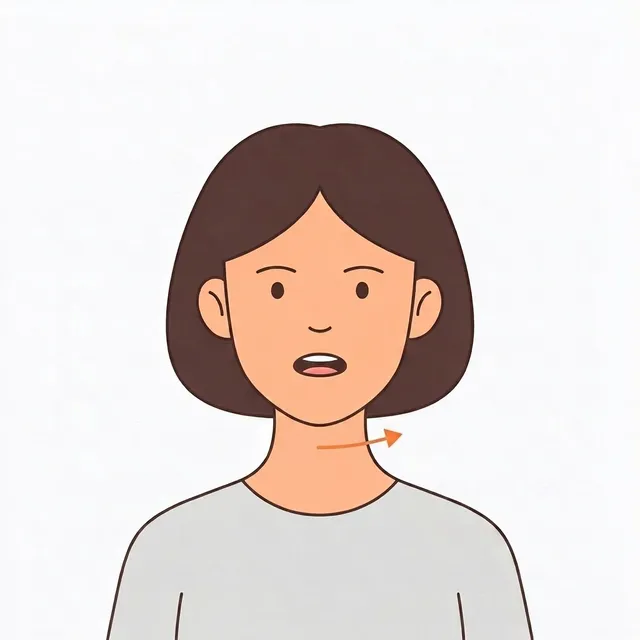
Repeat to the right.
- 4
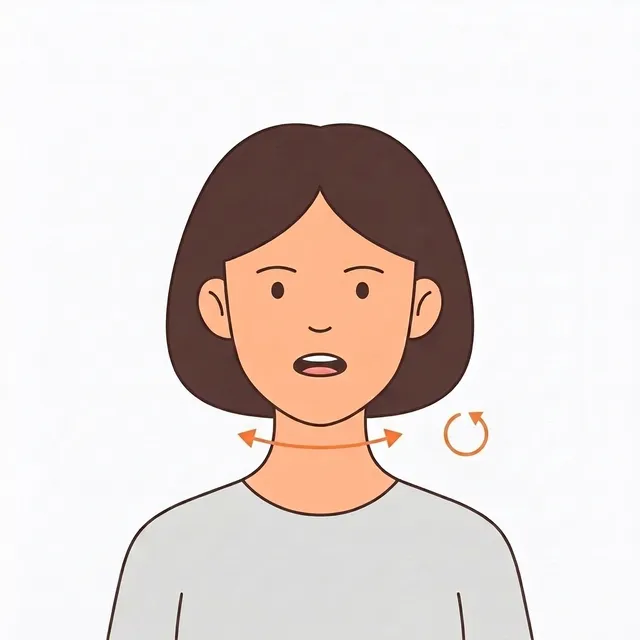
Add 2 reps toward the stiffer side, 10 reps total.
Authorship and evidence
Written by: ALYGN operator · content editor
Content reviewed:
Date of editorial content and source review. This does not represent review by a medical professional.
This exercise is self-care information for functional asymmetry that comes from muscle habits. Individual results and timelines vary, and the listed times and repetitions are not a medical prescription.
- NIDCR: Temporomandibular Disorders ↗
Background on jaw pain, locking, painless sounds, and conservative care. It does not validate this site’s individual movements or asymmetry correction.
Why it works
Sliding the jaw sideways trains joint muscles you rarely use deliberately. A stiffer direction means the muscles driving that movement have tightened — practicing it brings mobility back toward symmetry.
Beyond hinging open and shut, the jaw glides — forward, back, and side to side. Grinding food uses exactly this lateral glide, and one-sided chewers glide lopsidedly too. Push your jaw each way and one direction often feels distinctly smoother than the other; the bigger that gap, the more entrenched the asymmetric chewing pattern.
A restricted glide means the deep muscles driving that direction have stiffened. These muscles cannot be reached from outside — no massage can touch them — so movement is the only way to train them. That is why the jaw slide earns its place alongside the massage-type exercises.
Muscles involved
The star is the lateral pterygoid, buried deep behind the cheekbone, pulling the joint disc and lower jaw forward. The two sides alternate to create the glide — pushing your jaw left is mainly the right lateral pterygoid's work, a crossed arrangement. The medial pterygoid and masseter assist, and glide training tunes the coordination of this whole deep network.
Common mistakes
- Turning your head to fake the range — face forward, move only the jaw.
- Forcing maximum range immediately — extend it a little each rep instead.
- Wagging quickly side to side — that stresses the joint without training anything.
Signs you're doing it right
The stiff direction should loosen slightly with each rep — that gradual easing is the signal.
How often and when
Twice a day, five reps each direction. This is joint work — more is not better, and overdoing it just fatigues the joint. Attach it to mirror moments (morning wash, evening brushing) so you can watch the path as you go. Left-right glide range typically evens out within three to four weeks.
Once it feels easy
Once the sides match, add protrusion: slowly push the lower jaw forward until the bottom teeth pass the top, then return — the same muscle group in another direction. The final stage is the resisted glide: block the side of your jaw lightly with a finger and push into it isometrically for 5 seconds, building control on top of restored mobility.
Frequently asked questions
Q. The joint makes sounds when I slide.
Painless clicking — the disc shifting — is common, and slow glide work is not off-limits. But stop and see a dentist or oral-medicine specialist if the click comes with a catching feeling, pain, or an episode of your jaw locking shut. In those cases evaluation comes before exercise.
Q. Which direction should I practice more?
The stiff one. Slide fully each way at the mirror and give the narrower or jerkier direction one or two extra reps. The caution: "more practice" means more repetitions at the same gentleness, never more force. Once the sides match after a few weeks, return to an even split.
Q. Will glide practice reduce lower-face asymmetry?
Not directly — its role is restoring functional left-right balance in chewing. Only with that mobility can balanced chewing actually happen, and it is the chewing habit that influences muscle balance long-term. Think of it as the functional groundwork of lower-face management, meaningful as a set with balanced chewing and masseter release.
Cautions
- · Reduce range if the joint clicks loudly.