Face Line Tapping
Boost facial circulation to reduce left-right puffiness gaps.
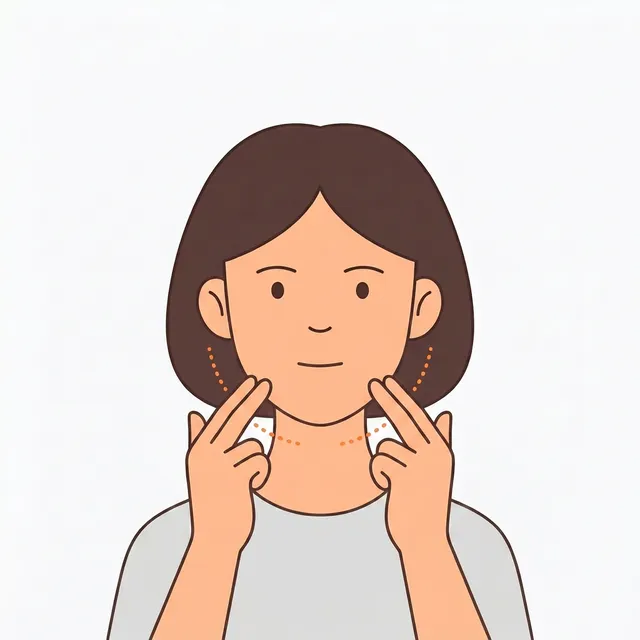
How to do it
- 1
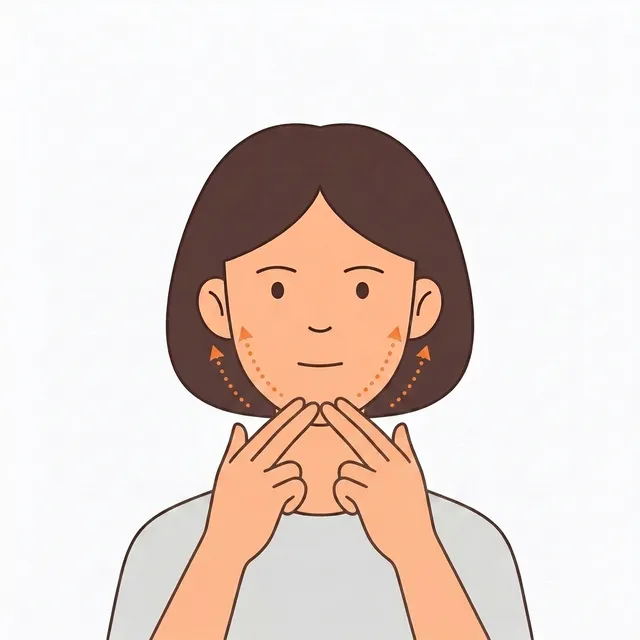
Tap with fingertips from mid-chin toward the ears.
- 2
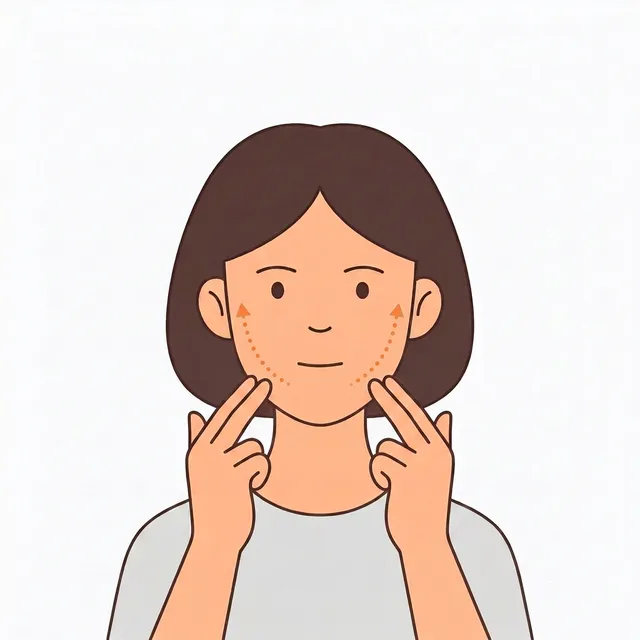
Tap from under the cheekbones toward the ears.
- 3
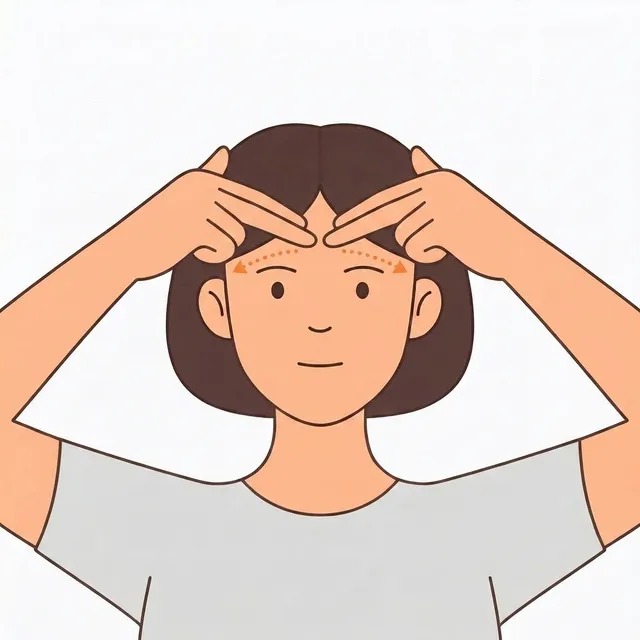
Tap from mid-forehead toward the temples.
- 4
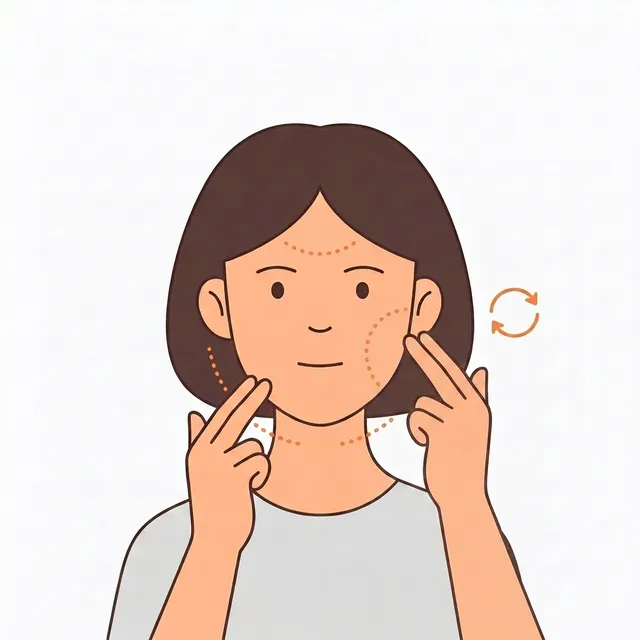
10 taps per line, 2 sets total.
Authorship and evidence
Written by: ALYGN operator · content editor
Content reviewed:
Date of editorial content and source review. This does not represent review by a medical professional.
This exercise is self-care information for functional asymmetry that comes from muscle habits. Individual results and timelines vary, and the listed times and repetitions are not a medical prescription.
- Alam et al. (2018): Facial exercise and the appearance of aging ↗
An uncontrolled pilot reporting appearance ratings in 16 completers over 20 weeks. It does not establish asymmetry correction, the effect of an individual movement, this site’s score, or a timeline for change.
Why it works
Light tapping wakes up blood and lymph flow under the skin. It is great for quickly settling temporary asymmetry caused by fluid retention — like mornings when one side looks puffier.
Mornings when your face looks more asymmetric than usual are mostly about puffiness. Lying down lets gravity keep fluid in the face — more of it pooled on the downward side if you slept on it. Salty food, alcohol, and short sleep the day before are the usual amplifiers. This kind of asymmetry drains on its own within hours; tapping simply accelerates the process.
Why tapping helps is simple: light, quick stimulation wakes capillary blood flow under the skin, and the repeated micro-pressure changes nudge lymph along. It stresses the skin less than deep massage — gentle enough for sensitive morning skin, and practical enough to do before makeup.
Muscles involved
The target here is not a muscle but the circulation system under the skin. The route is what matters: chin to below the ear, mouth corner to mid-ear, cheekbone to temple — always inner-to-outer and upward. Facial lymph ultimately collects around the ears and under the jaw, so every tapping line ends there.
Common mistakes
- Tapping with nails touching — use the pads of your fingers.
- Assuming harder is better — if the skin turns red, it is too much.
- Staying on one spot — move along the lines from center outward to actually move fluid.
Signs you're doing it right
Your face should feel warm and lightly refreshed, with the puffy side visibly settling.
How often and when
The default slot: one to two minutes after your morning wash. On puffy days, follow with a cold cloth or chilled spoon for 30 seconds — vasoconstriction compounds the effect. Tapping is same-day relief: it visibly works on that morning's puffiness, but reducing puffiness itself comes from evening salt and alcohol moderation and fixing your sleep position.
Once it feels easy
Once the lines are familiar, open the drains first: rub gently in front of and behind the ears and under the jaw for 10 seconds before starting — the standard lymph-work sequence, and it noticeably improves results. If puffiness keeps recurring, don't just chase it each morning; run ALYGN checks morning and evening and trace puffy days back to the previous night's habits — late meals, alcohol, sleep.
Frequently asked questions
Q. Does tapping have a lifting effect?
No structural lifting — it cannot reverse sagging. What it genuinely does is de-puff and restore color, making the face look temporarily more defined. For sagging, sun protection and dermatological treatments are the evidence-based routes. Think of tapping as "managing this morning's condition."
Q. Can I use a gua sha tool or roller instead?
Yes. Rollers cover broad areas evenly, and chilling them adds a cooling effect. The caution: tools make pressure harder to judge than fingers, so it is easy to push too hard. The direction rules (inner to outer, low to high) stay the same, and tool hygiene matters as much as clean hands.
Q. The same side is puffy every single morning.
Almost certainly a sleep-position signal: always sleeping on that side pools fluid there and adds pressure. Rather than draining it every morning, pair this with the sleep-posture reset to shrink the cause. If one-sided puffiness persists weeks after changing position, other causes — dental, sinus — are worth a medical look.
Cautions
- · Tapping too hard can irritate the skin.