Eye Palming
Relax eye muscles with palm warmth to release tension.
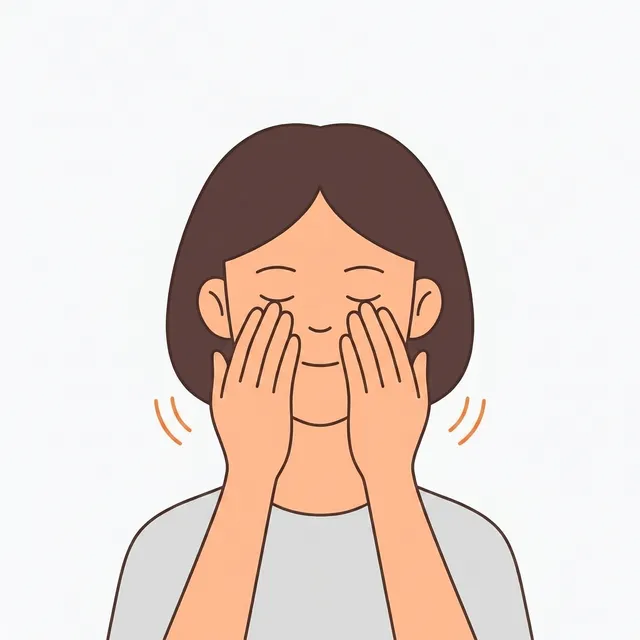
How to do it
- 1
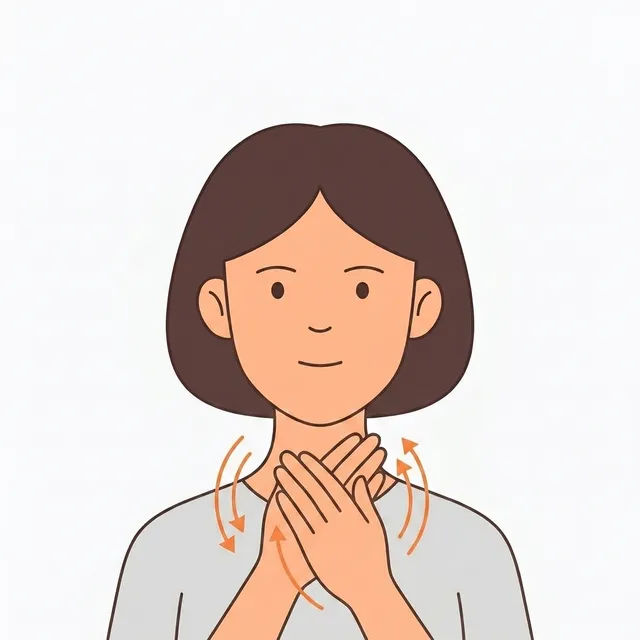
Rub your palms together until warm.
- 2
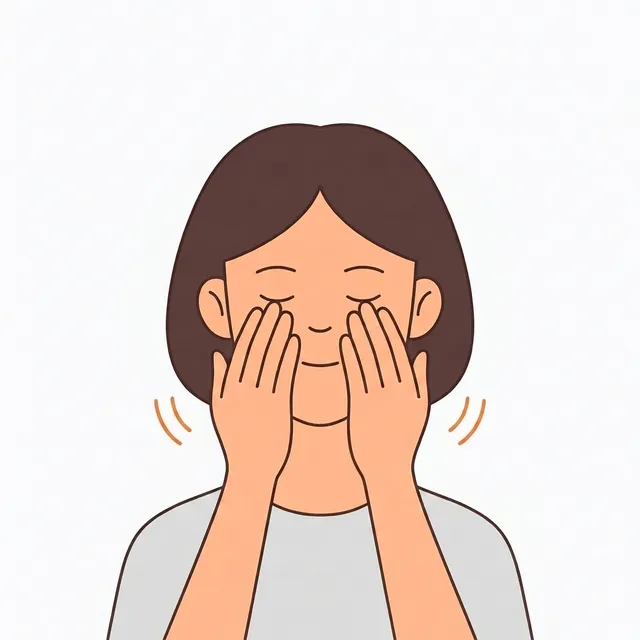
Cup your closed eyes with your palms.
- 3
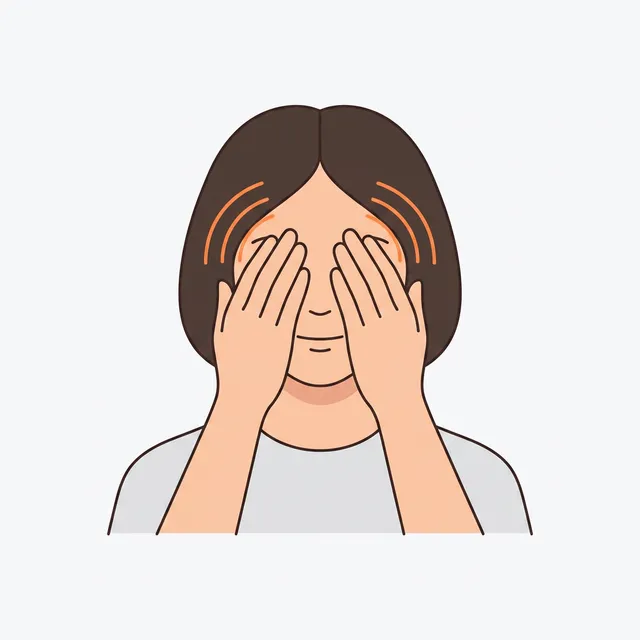
Relax for 30 seconds feeling the warmth.
- 4
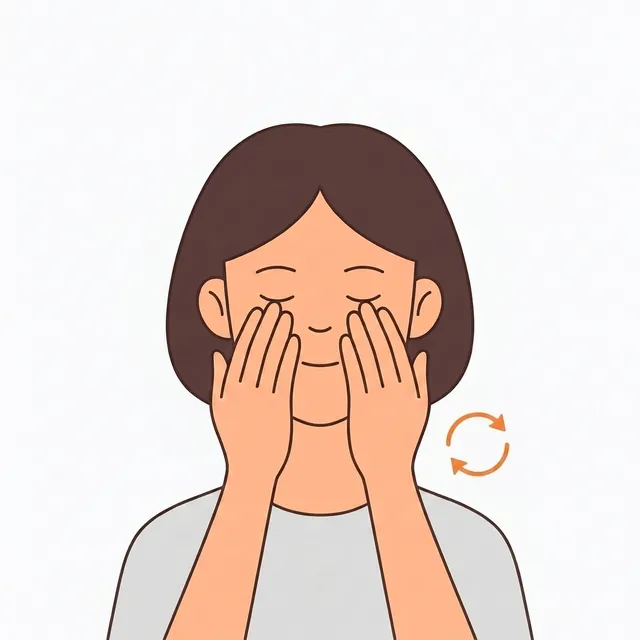
Repeat 3 times.
Authorship and evidence
Written by: ALYGN operator · content editor
Content reviewed:
Date of editorial content and source review. This does not represent review by a medical professional.
This exercise is self-care information for functional asymmetry that comes from muscle habits. Individual results and timelines vary, and the listed times and repetitions are not a medical prescription.
- MedlinePlus: Eye care and rest ↗
General information on screen breaks and eye comfort. It does not establish that brow massage or palming improves vision, eye size, swelling, or asymmetry.
Why it works
Palm warmth boosts blood flow around the eyes and relaxes the orbicularis muscles. Tired eyes squint unevenly without you noticing — warm relaxation settles this fatigue-driven asymmetry.
When you focus on a screen, blinking drops from 15–20 times a minute to around 5. Less blinking dries the tear film, and the muscles around the eyes settle into a faint squint. Crucially, that tension does not build evenly — monitor position, eye dominance, and squinting habits load one side more, which is why eye-size differences look exaggerated on tired days.
Palming is the simplest reset for this fatigue. Darkness cuts visual input, resting both the eyes and the brain's visual processing, while palm warmth boosts blood flow and melts muscle tension. No tools, no cost — a one-minute recovery you can run at your desk.
Muscles involved
The release targets are the orbicularis oculi — the squinting ring muscle — and the ciliary muscle inside the eye, exhausted from holding focus. The ciliary muscle stays contracted the entire time you focus on a near screen; only in palming's darkness, with focusing suspended, does it truly rest. Residual tension around the lids and brows unwinds with it.
Common mistakes
- Pressing the eyeballs — just cup your palms like a roof over them.
- Starting with cold hands — rub until they are properly warm.
- Keeping eyes open — they must be closed for the muscles to fully rest.
Signs you're doing it right
Warm relaxation around the eyes, then a brighter view and lighter eyes when you remove your hands.
How often and when
The ideal cadence: one minute for every 50–60 minutes of screen work — cutting fatigue before it accumulates beats unwinding it afterward. Realistically, three sessions a day (morning, afternoon, before bed) is a fine start. The benefits are immediate but short-lived by nature, so frequency matters more than intensity.
Once it feels easy
Palming has no intensity to increase, but it combines well: before it, squeeze your eyes shut and open wide five times to wake tear production; after it, gaze at something distant out the window for 20 seconds to release the focusing muscle in the opposite direction. The three-step "blink — dark — distance" routine is complete eye care.
Frequently asked questions
Q. Will it improve my vision?
No. There is no evidence palming corrects refractive errors like myopia or astigmatism — despite abundant "eye exercises restore vision" content, it is not medically recognized. Palming's real effects are fatigue relief and released tension around the eyes: valuable in themselves, but no substitute for vision correction.
Q. Can I do it wearing contact lenses?
Yes — eyes closed, palms cupped, nothing touches the eye, so lenses are fine. If long lens wear has left your eyes dry, a drop of artificial tears beforehand lets the tear film recover under closed lids. The never-press-the-eyeball rule matters extra with lenses in.
Q. I see flashing patterns when I cup my hands.
Afterimages and faint patterns in the dark (phosphenes) are a normal product of the visual system and fade shortly. However — flashes without pressure, a curtain-like shadow over part of your vision, or a sudden increase in floaters can signal retinal problems and warrant an immediate eye exam.
Cautions
- · Cover only — do not press the eyes.